Comparing Cell Organelles to Human Body Parts for Better Understanding
110 likes | 228 Views
This text draws parallels between cell organelles and human body parts to simplify the understanding of cellular biology. The nucleus acts as the brain, controlling the cell, while the cell membrane functions like a mouth, regulating substances entering and exiting. The cell wall provides structural support like the spine, while the endoplasmic reticulum resembles veins, transporting proteins. The Golgi apparatus functions similarly to the nervous system, sending signals, and mitochondria are likened to the heart, producing energy. The vacuole compares to the stomach for storage, and ribosomes are essential like calcium for bone health.


Comparing Cell Organelles to Human Body Parts for Better Understanding
E N D
Presentation Transcript
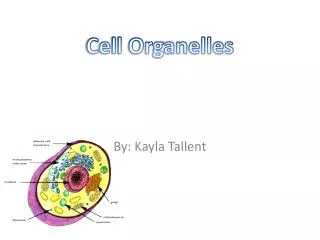
Cell Organelles By: Kayla Tallent
The Nucleus is to a: Brain The Nucleus is like a brain because the brain controls the body like the nucleus controls the cell.
The Cell Membrane is to a:Mouth The Cell Membrane is like a mouth because the mouth regulates what goes in and out of your body .
Cell Wall is to a: Spine A Cell Wall is like a spine because the spine is what supports your back and neck as a cell wall is the structure and support to a cell.
Endoplasmic reticulum is to a:Vein Endoplasmic reticulum is like a vein because blood passes through them like proteins go through the cell.
Golgi apparatus is to a: Nervous System The Golgi apparatus is like a Nervous System because the nervous system sends out signals to your brain so you will know what to do. Like a Golgi Apparatus Ships out Proteins.
Mitochondrion is to a: Heart The Mitochondrion is like a heart because the heart keeps you alive. Like the Mitochondrion produces energy to keep the cell alive.
Vacuole is to a: Stomach Vacuole is like a stomach because it stores all of the body's food water and waste like the vacuole does in the cell.
Ribosome is to: Calcium Ribosome is like calcium because the body needs calcium for the formation and maintenance of the bones. Like the Ribosome produce proteins to keep the cell strong.
The Difference in Plant and Animal Cells • Plant Cells Animal Cell___ • Have a ridged cell wall(Outside Covering) Cytoskeleton (Inside)________ • Chloroplasts (Photosynthesis) No Chloroplast_____________ • Usually square Can be any shape___________ • 1Large central Vacuole Many Small Vacuoles________