Download
1 / 30
300 likes | 414 Views
Proteins are essential macromolecules vital to all cellular structures in the human body. With an estimated 10,000 to 50,000 types, proteins consist of amino acids linked by peptide bonds, which determine their unique functions. These macromolecules play roles in building and maintaining tissues, catalyzing biochemical reactions (enzymes), and regulating body processes (hormones). Protein digestion and absorption occur throughout the digestive system. Adequate protein intake is crucial for growth and overall health, while deficiencies can lead to malnutrition and serious health issues.

E N D
Protein • vital to all cell structure • human body contains 10,000 – 50,000 different kinds • 1000 have been studied • versatile, unique, and have specific functions • contain carbon, hydrogen, oxygen and nitrogen (amino) • amino acids are the links in protein chains
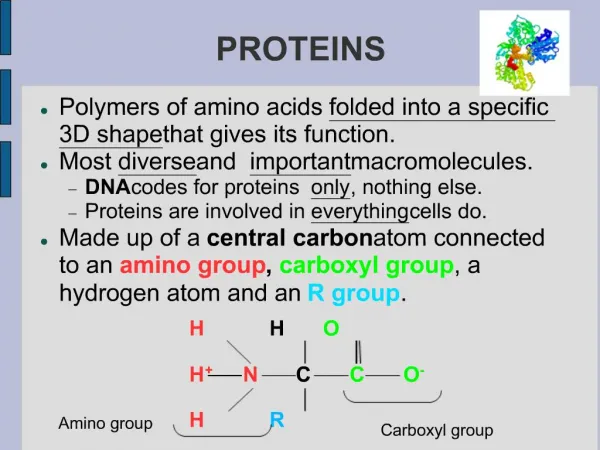
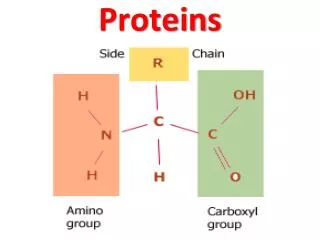
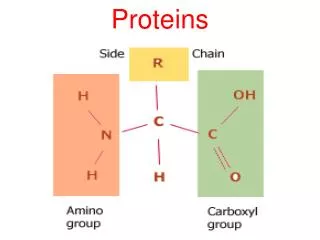
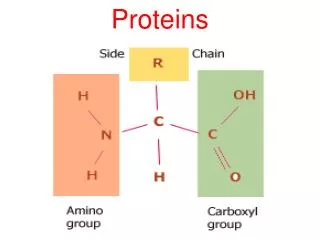
Amino Acids Side group varies Amino group • all 20 have the same basic structure • distinction is due to the variation in the side group • more than ½ are nonessential • 9 essential • proteins provide these Acid group
human insulin: 2 polypeptide chains for a total of 51 amino acids Proteins • links of varying sequences of amino acids form thousands of different proteins • peptide bond links amino acids together • most are several dozen to several 100 amino acids long • condensation reactions connect amino acids • 2 amino acids = dipeptide
Protein Shape • to function properly a protein must maintain it’s shape • hollow balls to carry or store materials • rodlike such as those found in tendons
Protein Denaturation • heat, acid, chemicals can cause proteins to lose their shape • lose their ability to function
Protein Digestion • mouth • crushed and moistened for ease of swallowing • stomach • hydrolysis • hydrochloric denatures allowing enzymes to attack the peptide bonds • pepsin (active form of enzyme pepsinogen) cleaves protein into smaller polypeptides and amino acids
Protein Digestion • small intestine • proteases hydrolyze into short peptide chains • peptidase enzyme further breaks chains down to amino acids
Protein Absorption • amino acids and some dipeptides are transported into intestinal cells • amino acids may be used for energy once inside the intestinal cells
Protein Synthesis • protein function is determined during synthesis • genes determine the amino acid sequences that make up unique protein
Protein Synthesis • DNA forms a template for the amino acids • amino acids are lined up to make the protein • genetic errors can alter the sequence resulting in consequences such as sickle-cell anemia
Roles of Proteins • building and maintenance • found in most body structures such as skin, tendons, membranes, muscle, organs and bones • enzymes • proteins that enhance chemical reactions • hormones • proteins that regulate body processes • some hormones are proteins
fluid balance • maintain the volume and composition of body fluids • acid-base balance • act as buffers • transportation • lipoproteins transport lipids • hemoglobin transport oxygen • antibodies • protein molecules used in defending out body against invading pathogens
energy • can be sacrificed to provide energy if needed • other functions • vision, blood clotting
Protein Metabolism • protein turnover • constant making and breaking of proteins • frees amino acids to “amino acid pool” • can be used to make body proteins • nonessential amino acids can be made from other amino acids
amino acid pool • stripped of nitrogens and made available for energy • deamination • can make other compounds such as melanin • make fat • amino acids are deaminated, nitrogen is excreted, carbon is converted to fat and stored • protein-rich foods can cause weight gain
Protein in Foods • protein quality • determined by child’s growth and adults health maintenance • influenced by digestibility and amino acid composition
digestibility • dependent on source • 90-99% of animal proteins • 70-90% plant proteins • amino acid composition • amino acids are necessary to make proteins • body makes whole proteins only • all have to be there at the same time • dismantle a protein to access an unavailable essential amino acid
PDCAAS • protein digestibility-corrected amino acid score • measure of protein quality • scientific formulas that take into account proportion of amino acids and relative digestibility of protein • used for food labeling
Food Labels • protein content must be stated in grams • % Daily Value not mandatory unless • food makes a protein claim • intended for children < 4 yrs old • includes quantity and quality
PEM • protein-energy malnutrition • deprivation of protein, energy, or both • most often children • 500 million children • 33,000 die /year
PEM • inadequate food intake • poor growth in children • weight loss and wasting in adults • acute PEM • recent severe food deprivation • chronic PEM • long-term food derpivation
Marasmus • chronic PEM • person is starving • Kwashiorkor • acute PEM • sudden or recent food deprivation
Health Effects of Protein • excess protein as well as too little protein can affect health • food rich in protein is often rich in saturated fats • difficult to separate the risk factors
Protein Intake • continuous breakdown of protein • some protein is lost • cannot store amino acids • protein replacement is dependent on dietary protein • essential amino acids • source of nitrogen • 200-700 kcalories = 50-175 grams
Protein Intake • RDA is 0.8 grams/kilogram of body weight • enough for repair • higher for infants and children and pregnant women • enough for growth
Protein and Amino Acid Supplements • not necessary, may even be harmful • muscle work builds muscle • expensive and less digestible • amino acids do not occur singly in food • body can’t handle high concentrations or unusual combinations
2 exceptions • lysine • may suppress herpes infections and appears safe • tryptophan • effective for pain relief and sleep • experimental