Download
1 / 8
90 likes | 188 Views
Learn how the US food system contributes 20% of GHG emissions through processing, transportation, and waste, impacting global warming. Discover ways to reduce this impact by consuming local, seasonal foods and minimizing red meat and dairy consumption. By making conscious choices, we can create a sustainable food future with reduced greenhouse gas emissions.

E N D
Creating a Sustainable Food System with Reduced Greenhouse Gas Emissions Ben Senauer Professor of Applied Economics
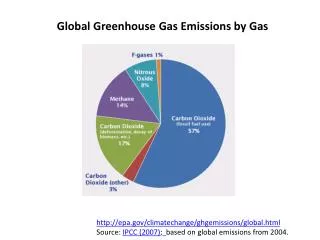
US Food System Produces 20% of GHG Emissions • From farm to waste disposal. • Majority is CO2 from processing & transportation. • Methane, mainly from ruminants and decomposition of food waste. • 23X the effect of CO2 on global warming. • Nitrous oxide, from nitrogen fertilizer. • 296X the effect of CO2.
Global Food System • Responsible for 30% of GHG emissions. • Large Ag. sectors with smaller industrial and service sectors, and low household energy use, especially in developing countries. • Paddy rice cultivation is a major source of methane. • As fertilizer and other organic matter decompose under water (anaerobic).
American Diet & GHG’s • Typical diet has large amounts of meat, processed food, and products shipped long distances. • Average food item travels 1,500 miles. • Typical diet produces as much or more GHG’s as driving an average mid-size car.
continued • Typical American diet produces 2.8o tons of CO2 per year. • Various motor vehicles driven average number of miles (8,332 miles per year; 63% highway). • Prius: 1.19 tons of CO2 • Camry: 2.24 tons • Suburban: 4.76 tons.
Energy Efficiency of Representative Foods* • Beef (grain feed) 6.4 • Tuna 5.8 • Milk 20.6 • Apples 110.0 • Potatoes 123.8 • Soybeans 415.0 • * Percentage of fossil fuel energy calories retrieved as edible calories
Reducing GHG Emissioms from US Food System • Reduce the consumption of red meat, especially from grain-fed cattle, and dairy products. • Consume more foods grown locally and in season. • Eliminate bottled water or at least switch to locally bottled water. • Reduce food waste. • Eliminate any product that is shipped by air freight.