Petulant
The term "petulant" describes a person who is ill-tempered, sulky, or moody in a peevish manner. Originating from the late 16th century, it conveys traits of being irritable or easily annoyed. In literature, characters like Hazel from "North of Fifty-Three" and Mr. Scrooge exemplify this demeanor. This description also outlines examples of petulant behavior, frequently displayed by toddlers, pets like cats and roosters, and characters from pop culture such as Lucy van Pelt and Shrek. Discover the roots and visual representation of "petulant."

Petulant
E N D
Presentation Transcript
Petulant By: Julia Nagy
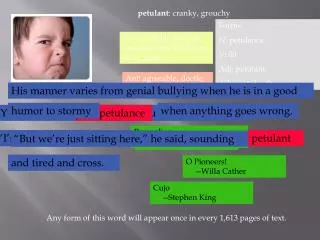
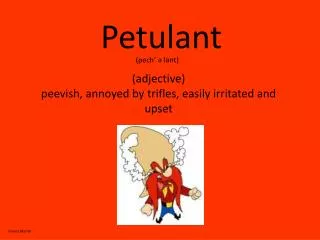
Petulant: Denotative Meaning • Adj • Ill-tempered or sulky in a peevish manner. Pouty.
Etymology • 1599, "immodest, wanton, saucy," from M.Fr. petulant (1350), from L. petulantem (nom. petulans) "wanton, froward, insolent," from the root of petere "rush at, seek" (see petition). Meaning "peevish, irritable" first recorded 1775, probably by influence of pet (2).
Examples! • Hazel grew impatient, petulant, aggrieved.- North of Fifty-Three by Bertrand W. Sinclair • He was moody and petulant, and for a time could hardly conceal his aversion to Bull.- Eric by F. W. Farrar • Perhaps Obama's answer was "tough" because Henry could not mask a petulant, angry demeanor when phrasing the question.- CNN Political Ticker
10 Things that are Petulant • Toddlers • Camels • Lucy van Pelt (the “Peanuts” character that always is mean to Charlie Brown) • Shrek (in the beginning of the movie) • Roosters • Turkeys • Mr. Scrooge • Cats • Koala Bears • Stanley Hudson (from the Office)