Understanding Technical Communication in Biotechnology: Effective Methods and Practices
This lecture presents the essentials of technical communication within the context of biotechnology and environmental science. We will explore how technical information is defined, including numerical data, graphic representations, and documentation methods. Key components of technical documents will be discussed, emphasizing the importance of structured communication, data representation, and the role of visuals. The session will also cover methods for analyzing data, conducting field activities, and developing clear, impactful technical reports that facilitate understanding and inform relevant stakeholders.

Understanding Technical Communication in Biotechnology: Effective Methods and Practices
E N D
Presentation Transcript
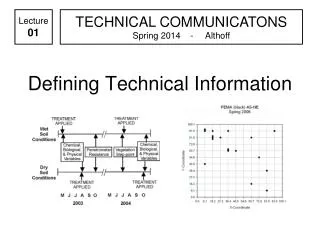
Lecture 01 TECHNICAL COMMUNICATONS Spring 2014 - Althoff Defining Technical Information
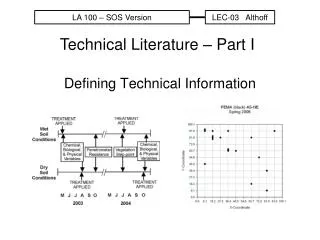
Technical Info can be…. • ______: numbers, graphic representation of numbers, images (of cells, tissues, organs, individuals, habitat, landscapes, etc.) • ________: how something “works”, how we perceive a process, impact, renovation • __________: new designs, options, and/or applications of the equipment • ____________________: approaches and protocols to conducting field or lab activities… or data analysis • _______________________: what happened when • Etc.
DATA – graphic view s. Pacific rattlesnake cottonmouth Species of snake & chronology of bites can influence amount of venom released during each bite
DATA - Models G1 G0 MITOSIS CELL CYCLE G2 S
DATA - Equipment Net Radiometer – measures incoming & outgoing radiation Pitfall trap - arthropods
DATA - images Avian leucosis complex Diffuse nodular lesions in the liver, spleen, intestine and heart Human red blood cells (2 with nucleus present) Timber Harvest (clearcuts) Wolf – age by tooth wear
DATA – techniques/proceduresset/up Whole body HYPERTHERMIA
DATA – chronology of events Indiana bat (Myotissodalis) annual chronology
Planning Technical Documents (written or oral) usually have some common elements…. • The need to make an _______________ • Preparation of _____________________, and/or ____________________ • Assembling _____________________ (“other technical sources”) • Development of a ___________ (and subsequent revised drafts!)
Title Authors (and affiliation) Date Abstract (if “long”) Key Words Introduction (and/or Background Info) Study Area (if not a lab) Methods & Materials Results Discussion Conclusions (and/or management implications) Acknowledgements Literature Cited Appendix Typical Components NR Info Communication Format
Verbal accompanied by “____________” visual aids “______ detail”, usually Not likely to be distributed….greater chance to “________ _______” now. Obviously, no verbal Must be well written Visuals—Graphs are great…but Tables often give “________” data ____________ common and/or expected Wider distribution…___ chance to “explain more” “Outlet” Determines What’s In & What’s OutFor TECHNICAL INFO???? ORAL WRITTEN