Download
1 / 5
0 likes | 0 Views
Access panels improve building accessibility in three key ways. Initially, they provide you quick and easy maintenance access to plumbing, electrical, and HVAC systems, saving you time and hassle

E N D
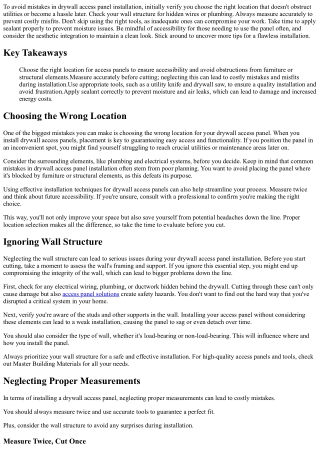
To avoid mistakes in drywall access panel installation, initially verify you choose the right location that doesn't obstruct utilities or become a hassle later. Check your wall structure for hidden wires or plumbing. Always measure accurately to prevent costly misfits. Don't skip using the right tools, as inadequate ones can compromise your work. Take time to apply sealant properly to prevent moisture issues. Be mindful of accessibility for those needing to use the panel often, and consider the aesthetic integration to maintain a clean look. Stick around to uncover more tips for a flawless installation. Key Takeaways Choose the right location for access panels to ensure accessibility and avoid obstructions from furniture or structural elements.Measure accurately before cutting; neglecting this can lead to costly mistakes and misfits during installation.Use appropriate tools, such as a utility knife and drywall saw, to ensure a quality installation and avoid frustration.Apply sealant correctly to prevent moisture and air leaks, which can lead to damage and increased energy costs. Choosing the Wrong Location One of the biggest mistakes you can make is choosing the wrong location for your drywall access panel. When you install drywall access panels, placement is key to guaranteeing easy access and functionality. If you position the panel in an inconvenient spot, you might find yourself struggling to reach crucial utilities or maintenance areas later on. Consider the surrounding elements, like plumbing and electrical systems, before you decide. Keep in mind that common mistakes in drywall access panel installation often stem from poor planning. You want to avoid placing the panel where it's blocked by furniture or structural elements, as this defeats its purpose. Using effective installation techniques for drywall access panels can also help streamline your process. Measure twice and think about future accessibility. If you're unsure, consult with a professional to confirm you're making the right choice. This way, you'll not only improve your space but also save yourself from potential headaches down the line. Proper location selection makes all the difference, so take the time to evaluate before you cut. Ignoring Wall Structure Neglecting the wall structure can lead to serious issues during your drywall access panel installation. Before you start cutting, take a moment to assess the wall's framing and support. If you ignore this essential step, you might end up compromising the integrity of the wall, which can lead to bigger problems down the line. First, check for any electrical wiring, plumbing, or ductwork hidden behind the drywall. Cutting through these can't only cause damage but also access panel solutions create safety hazards. You don't want to find out the hard way that you've disrupted a critical system in your home. Next, verify you're aware of the studs and other supports in the wall. Installing your access panel without considering these elements can lead to a weak installation, causing the panel to sag or even detach over time. You should also consider the type of wall, whether it's load-bearing or non-load-bearing. This will influence where and how you install the panel. Always prioritize your wall structure for a safe and effective installation. For high-quality access panels and tools, check out Master Building Materials for all your needs. Neglecting Proper Measurements In terms of installing a drywall access panel, neglecting proper measurements can lead to costly mistakes. You should always measure twice and use accurate tools to guarantee a perfect fit. Plus, consider the wall structure to avoid any surprises during installation. Measure Twice, Cut Once
Cutting corners on your measurements can lead to costly mistakes in drywall access panel installation. It's tempting to rush through this step, but keep in mind that accurate measurements are vital. When you measure, always double-check your numbers. Fire Rated Access Panels A slight error can result in gaps Access Panels or an ill-fitting panel, which can waste both time and materials. Take the time to assess the space where you'll install the access panel. Consider any obstacles that might affect your measurements, such as plumbing or electrical components. Use a reliable measuring tape and mark your measurements clearly on the drywall. If you're unsure, don't hesitate to ask for a second opinion or re-measure before cutting. Also, think about the panel's placement. A poorly positioned access panel can lead to accessibility issues later on. By ensuring that your measurements are precise, you'll save yourself from the frustration of redoing work and potentially damaging other areas of your drywall. In short, always keep in mind the adage: 'Measure twice, cut once.' This simple practice can save you from headaches and extra costs down the line. So, take your time, and you'll be glad you did! Use Accurate Tools Using accurate tools is vital for guaranteeing proper measurements in drywall access panel installation, as even the slightest inaccuracy can lead to significant setbacks. You might think that rough estimates are good enough, but that's a recipe for trouble. Investing in the right tools not only saves you time but also assures a more professional Drywall Access Panels finish. Here are some important tools Universal Access Panels you should never overlook: Measuring Tape: A reliable measuring tape guarantees precise dimensions.Level: This tool helps you maintain even surfaces, avoiding crooked panels.Square: Using a square assures right angles for your cuts. Consider Wall Structures Failing to contemplate wall structures can lead to improper fit and function of your drywall access panels, making accurate measurements even more vital. When you measure, consider the type of wall you're working with—whether it's a stud wall, masonry, or something else entirely. Each structure has its own quirks and dimensions that can affect panel installation. For instance, if you're installing in a stud wall, you need to account for the spacing between studs. Ignoring this can result in panels that don't align properly, making access cumbersome. In masonry walls, you'll want to verify that your measurements allow for the thickness of the material, as this can impact how the panel sits flush against the wall. Additionally, be aware of any utilities or wiring that may be hidden within the wall. You don't want to cut into something significant, creating a bigger problem for yourself. Always double-check your measurements before cutting. By taking wall structures into account, you'll verify that your access panels fit correctly and function as intended, avoiding unnecessary headaches in your installation process. For high-quality access panels, check out Master Building Materials for reliable options. Skipping the Right Tools Have you ever thought about how crucial the right tools are for a successful drywall access panel installation? Skipping this step could lead to a frustrating experience and a less-than-perfect outcome. Using inadequate tools can compromise the quality of your work, making it harder to achieve a clean, professional finish. Here are some key tools you shouldn't overlook: Utility Knife: Crucial for cutting drywall neatly.Drywall Saw: Perfect for making precise openings for access panels.Screw Gun: Speeds up the installation process and guarantees secure fastening. When you invest in the right tools, you streamline the installation process and reduce the risk of errors. It's tempting to grab whatever's on hand, but this could lead to uneven cuts or loose panels.
So, before you plunge into your project, gather the necessary tools. You'll find that taking the time to prepare will save you effort and frustration down the line. For all your drywall needs, consider checking out Master Building Materials for high-quality tools and supplies. Overlooking Sealant Application When installing drywall access panels, you can't afford to overlook sealant application. Proper sealant is essential for preventing moisture and air leaks, which can lead to bigger problems down the line. Let's investigate common sealant mistakes and how to choose the right one for your project. Importance of Proper Sealant Many overlook the importance of applying the right sealant during drywall access panel installation, which can lead to costly repairs down the line. Using a proper sealant guarantees a tight fit, preventing moisture damage and air leaks. Here's why you shouldn't skip this essential step: Moisture Resistance: A good sealant protects against water infiltration, reducing the risk of mold.Energy Efficiency: Proper sealing keeps your HVAC system working efficiently, lowering energy bills.Structural Integrity: Sealants help maintain the complete stability of the drywall, preventing cracks and sagging. When you choose the right sealant, you're investing in the longevity of your installation. Don't underestimate the power of proper sealant application—it's a small step that yields significant benefits. Common Sealant Mistakes Overlooking sealant application is a common mistake that can compromise the effectiveness of your drywall access panel installation. When you skip this vital step, you may inadvertently allow moisture, air, and pests to infiltrate your space, leading to potential damage over time. It's important to keep in mind that sealant not only provides a finished look but also acts as a barrier against unwanted elements. Another key point is the timing of your sealant application. If you apply it too early or too late, it can affect the adhesion and overall integrity of your installation. Make certain the surface is clean and dry before applying the sealant Acudor Fire Rated Access Panels to guarantee a strong bond. Additionally, don't rush through the process. Take your time to apply an even and adequate layer of sealant around the edges of the access panel. A hasty application can result in gaps that defeat the purpose of sealing. Choosing the Right Sealant Choosing the right sealant is crucial for guaranteeing a tight, effective seal around your drywall access panel. A good sealant not only prevents moisture and dust infiltration but also improves the longevity of the installation. Here are some key factors to take into account when selecting your sealant: Type of Sealant: Choose between silicone, latex, or polyurethane based on your specific needs.Durability: Look for a sealant that can withstand temperature fluctuations and moisture exposure.Ease of Application: Opt for a sealant that comes in a convenient tube for precise application. Don't overlook the sealant application process itself. Applying the sealant too thinly or unevenly can lead to gaps that compromise the effectiveness of the seal. Make certain to follow the manufacturer's instructions, and don't rush. A well-done sealant application will protect your investment and guarantee that your access panel functions as intended. For the best products, check out Master Building Materials to find everything you need for a successful installation. Failing to Check Accessibility
When installing a drywall access panel, it's crucial to guarantee you've accounted for accessibility both before and after the installation. You don't want to realize too late that the panel's location makes it difficult to reach or use. Before you start, consider who'll need access and how frequently the panel will be used. Think about the tools or equipment that may need to fit through the opening and verify there's enough space around it. It's also significant to check the surrounding area. Verify there are no obstructions like pipes, wires, or other structural elements that could hinder access. You should scout the area to confirm that accessing the panel won't be a hassle after installation. If the panel's too high or low, or if it's placed in a cramped space, you could end up regretting your choice. Lastly, remember to communicate with anyone who'll be using the access panel. They might have specific needs or preferences that can help you determine the best placement. By prioritizing accessibility, you'll save yourself time and frustration down the line. Disregarding Aesthetic Integration Neglecting to contemplate how the access panel fits within your thorough design can lead to a jarring visual impact in your space. An access panel isn't just a functional element; it's also part of your complete aesthetic. If you don't consider its placement and appearance, you could inadvertently disrupt the harmony of your design. Here are some key points to keep in mind for aesthetic integration: Color Coordination: Verify the panel matches the surrounding wall color for a seamless look.Material Selection: Choose materials that complement your existing surfaces, whether it's drywall, tile, or wood.Size Considerations: Select a panel size that's proportionate to the surrounding features to avoid visual imbalance. Frequently Asked Questions What Type of Drywall Access Panel Is Best for My Project? When choosing a drywall access panel, consider the size, material, and location. Metal panels work well for high-traffic areas, while plastic panels are great for moisture-prone spaces. Your project's specific needs will guide your decision. How Do I Ensure the Panel Matches My Wall Texture? To guarantee your panel matches the wall texture, choose a panel designed for your specific texture type. You can also apply a matching texture spray or compound after installation for a seamless look. Can I Install an Access Panel in a Ceiling? Yes, you can install an access panel in a ceiling. Just make sure you choose the right panel size, support it properly, and follow the manufacturer's instructions for a secure and effective installation. What Materials Are Recommended for Access Panel Frames? For access panel frames, you'll want to use materials like galvanized steel or durable plastic. These options provide strength and resistance to wear, ensuring your installation lasts while maintaining easy access to the space behind. How Do I Maintain and Clean My Access Panel? To maintain and clean your access panel, wipe it down regularly with a damp cloth and mild detergent. Avoid abrasive cleaners that could scratch the surface. Inspect it occasionally for any signs of wear or damage. Conclusion By avoiding these common mistakes, you can guarantee a successful drywall access panel installation. Always choose the right location, pay attention to wall structure, and take accurate measurements.
Don't forget to use the proper tools and apply sealant where needed. Check for accessibility and consider how the panel fits into your comprehensive design. With these tips in mind, you'll not only save time and money but also achieve a professional-looking finish that lasts. Happy DIYing!