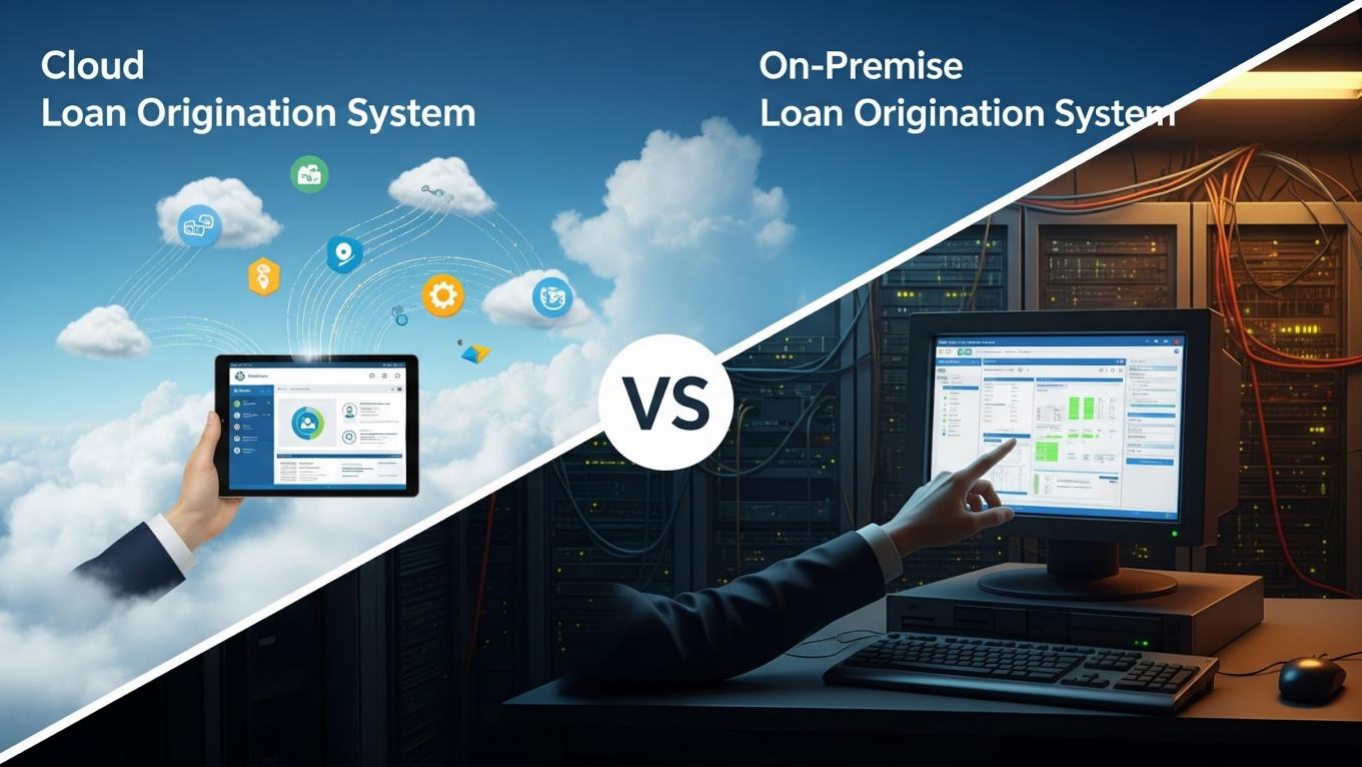
In today’s fast-moving financial world, lenders and banks are under constant pressure to deliver faster, more secure, and more customer-friendly loan services. At the center of this transformation is the Loan Origination System (LOS)—the technology that manages the process of creating, approving, and disbursing loans. But here comes the big question: should organizations rely on a traditional On-Premise LOS, or should they move to a Cloud-Based LOS? Both options have their advantages and limitations. Choosing the right system can affect costs, scalability, compliance, security, and customer experience. In this article, we will explore the differences, pros and cons, and help you decide which model best suits your lending business.
What is an On-Premise Loan Origination System?
An On-Premise Loan Origination System is installed and hosted within the company’s physical data centers. This means the software and hardware are owned, managed, and controlled by the organization itself.
Key Features
- Hosted on in-house servers
- High level of control over infrastructure
- Customizable based on business needs
- Usually requires large upfront investment
Benefits
- Control: Banks and lenders get full control over security, data storage, and system management.
- Customization: Organizations can tailor the system to match unique internal processes.
- Compliance: Some industries prefer on-premise setups due to strict data regulations.
Challenges
- High Costs: Buying hardware, licenses, and IT resources requires a big initial budget.
- Maintenance Burden: Regular upgrades, patches, and troubleshooting depend on internal IT staff.
- Limited Scalability: Expanding requires new servers and infrastructure.
What is a Cloud-Based Loan Origination System?
A Cloud Loan Origination System is hosted on remote servers and delivered over the internet. Lenders subscribe to the service, paying monthly or annual fees, while the cloud provider manages infrastructure, upgrades, and security.
Key Features
- Hosted on third-party cloud servers (AWS, Azure, Google Cloud, etc.)
- Pay-as-you-go model with subscription pricing
- Accessible from anywhere with internet connection
- Automatic updates and upgrades
Benefits
- Cost-Effective: No need for heavy upfront investments in servers and hardware.
- Scalability: Easily expand capacity as loan volumes grow.
- Accessibility: Teams can work from multiple locations using secure cloud logins.
- Automatic Updates: Providers roll out regular upgrades and security patches.
Challenges
- Dependence on Internet: Connectivity issues can impact access.
- Data Security Concerns: Some organizations worry about storing sensitive data on third-party servers.
- Regulatory Challenges: Data localization laws may restrict cloud usage in certain regions.
Key Differences: Cloud vs On-Premise Loan Origination Systems
On-Premise LOS
- Cost: High upfront investment in hardware & licenses
- Scalability: Limited, requires new infrastructure
- Security: Fully managed in-house, higher control
- Maintenance: In-house IT team required
- Accessibility: Restricted to office network
- Speed of Deployment: Slow, may take months
Cloud-Based LOS
- Cost: Subscription-based, lower initial costs
- Scalability: Highly scalable with flexible resources
- Security: Shared responsibility with provider
- Maintenance: Provider handles updates automatically
- Accessibility: Remote, anytime access via internet
- Speed of Deployment: Faster implementation in weeks
Advantages of Cloud Loan Origination Systems
- 1. Faster Time to Market – Cloud LOS can be set up within weeks, while on-premise may take months.
- 2. Lower IT Burden – No need to maintain servers or hire extra IT staff.
- 3. Flexible Scaling – Perfect for lenders with fluctuating loan demand.
- 4. Better Customer Experience – Customers enjoy quicker approvals and mobile-friendly access.
- 5. Disaster Recovery – Cloud systems offer built-in backup and recovery solutions.
When On-Premise Still Makes Sense
Even though cloud systems are popular, some lenders still prefer on-premise LOS in specific cases:
- Strict Data Regulations: Industries like government banking or defense-related finance often require in-house data control.
- High Customization Needs: If a bank wants full control over workflows, on-premise allows deeper customization.
- Existing Infrastructure: Large organizations that already invested in data centers may want to maximize their hardware.
Which One Should Banks & Lenders Choose?
The choice between cloud and on-premise LOS depends on:
- Budget: Small and mid-sized lenders usually benefit from cloud’s affordability.
- Growth Plans: If scalability is important, cloud is more future-proof.
- Security & Compliance Needs: If regulations demand full data control, on-premise might be necessary.
- Operational Model: If remote work and digital lending are priorities, cloud LOS is the clear winner.
Most modern lenders are moving toward cloud-first strategies because of flexibility, cost-effectiveness, and speed. However, hybrid models are also emerging, where critical data is kept on-premise while the rest operates on cloud.
The Future of Loan Origination Systems
The lending industry is moving towards cloud-native digital platforms that integrate with artificial intelligence, machine learning, and big data analytics. Features like AI-driven credit scoring, automated KYC, and faster loan approvals are becoming standard.
In the near future, we will see:
- More adoption of cloud-first LOS by banks and fintechs.
- Increased focus on data security and compliance in cloud platforms.
- Growth of API-driven ecosystems, enabling seamless integration with CRMs, payment gateways, and credit bureaus.
Conclusion
Choosing between Cloud vs On-Premise Loan Origination Systems is not a one-size-fits-all decision. On-premise provides control and compliance benefits, but it comes with higher costs and limited scalability. Cloud LOS, on the other hand, offers speed, flexibility, cost savings, and a modern customer experience. For most lenders, especially those aiming to grow and compete in the digital lending market, Cloud Loan Origination Systems are the future. However, the final choice depends on your organization’s size, compliance needs, and digital transformation goals.