Postwar America: Nativism, Isolationism, and Labor Unrest
In the aftermath of World War I, America grappled with significant societal challenges including nativism, isolationism, and labor unrest. Prejudice against foreign-born individuals surged, while isolationist policies distanced the U.S. from global affairs. Fueled by the Red Scare, fears of communism led to the Palmer Raids, violating civil rights in the hunt for suspected radicals. Labor movements faced turmoil, exemplified by significant strikes, yet workers pushed for better conditions. Amidst the return of the KKK and immigration restrictions, these trends defined a turbulent era in American history.


Postwar America: Nativism, Isolationism, and Labor Unrest
E N D
Presentation Transcript
Trends • Nativism: • Prejudice against foreign-born people that sweeps across the nation. • Isolationism: • U.S. policy of pulling away from involvement in world affairs.
Communism Panic • Communism: Government run by a dictator, equalizes by ending private property and making all businesses government owned. • Red Scare: Americans feared a world workers revolution as Communists in the U.S. became violent.
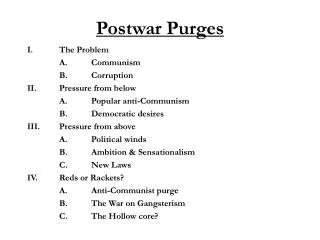
Consequences • Palmer Raids • Att. Gen. Palmer assigns J. Edgar Hoover to hunt down communists, socialists, and anarchists. Hundreds deported and civil rights violated. • Complete phony. • Sacco and Vanzetti • Italian Immigrants tried and executed for a crime they may or may not have committed.
Limiting Immigration • KKK • KKK returns, focused on immigrants and anything “UnAmerican”. • Loses popularity over criminal activities. • Quota System: Emergency Quota Act • Limits Immigration from certain continents and countries. • Focused on Southern and Eastern Europe and Japan.
Labor Unrest • Labor Board no longer controls strikes. • Boston Police Strike • Police strike ends, but all fired…Coolidge hires vets and National Guard. • Steel Mill Strike • 300,000 workers strike. • Strikers beaten by police and troops. • Strikers lose union, but get 8 hour work day.
Coal Miners Strike • Union led by John Lewis strikes. • Miners achieve pay increase, but still have long work hours. • End of Labor Movement • 1)Immigrants willing to work in bad conditions. • 2)Unions couldn’t overcome language barrier. • 3)Migrating farmers relied on themselves. • 4)African Americans excluded.