Download
1 / 7
70 likes | 207 Views
This exploration delves into whether President Franklin D. Roosevelt intentionally steered the U.S. towards entering World War II, examining pivotal foreign policy actions such as the Good Neighbor Policy, the Stimson Doctrine, and Reciprocal Trade Agreements. It highlights key events leading up to the war, including Japan's invasion of Manchuria, the sinking of the Panay, and the implications of the Atlantic Charter. The analysis considers Roosevelt's gradual military preparedness and strategic decisions that may have signaled an eventual shift from neutrality to active involvement in global conflict.

E N D
Prelude to War Did FDR intend to enter the war all along?
Foreign Policy • Good Neighbor Policy • Platt Amendment – nullified, exc. Guantanamo • Recognition for USSR • Independence for the Philippines • Reciprocal Trade Agreements
Asia • 1931: Japan invades Manchuria • Stimson Doctrine • 1937: Invasion of China • Sinking of the Panay • 1940: Japan joins the Axis
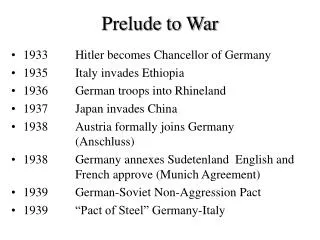
Appeasement • 1935 – Ethiopia • 1936 – Rhineland • 1937 – China • 1938 – Sudetenland
Neutrality • 1935 • Forbid US travel on belligerent parties’ ships • No arms shipment to belligerents • 1936 • No loans to belligerents • 1937 • No shipment of arms to belligerents
Preparedness • 1939: Cash and Carry • 1940: Selective Service • Registration of men between 21-35 • 1.2 million troops trained in one year • 1940: Destroyers for Bases • 1941: Lend Lease • Shoot on sight • 1941: Atlantic Charter • Self-determination • No territorial expansion • Free trade
Four Freedoms: 1941 • Of Speech • Of Religion • From Fear • From Want