Innovative Roofing Solution: PET Bottle Strips for Sustainable Alternatives in Ecuador
This project presents a novel device designed to clamp and bind PET bottle strips for use as roofing material, addressing the urgent need for sustainable roofing options in Ecuadorian villages. It details the binding process using heated nails powered by iron, forming a strong bond at the rim of holes in the plastic. While heating is a feasible method, concerns about heat efficiency, alternative joining methods, and overall structural integrity have arisen. Our exploration seeks to optimize the binding process while ensuring the material remains waterproof and does not generate excess heat inside homes.

Innovative Roofing Solution: PET Bottle Strips for Sustainable Alternatives in Ecuador
E N D
Presentation Transcript
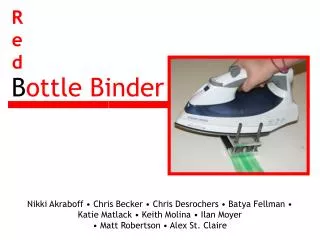
Red Bottle Binder Nikki Akraboff • Chris Becker • Chris Desrochers • Batya Fellman • Katie Matlack • Keith Molina • Ilan Moyer • Matt Robertson • Alex St. Claire
Problem and Customer Contact Prof. David Saiia of Ithaca College—Bottle Peeler Product description Device to clamp and bind PET bottle strips to be used as roofing material. • Problem • Need for alternative roofing to thatch for villages in Ecuador
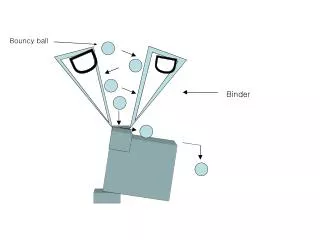
Design • Heated nails that penetrate plastic powered by iron • Binding method • Pointed tip forms bond at rim of holes • Mock-ups to test automation of hole binding
Is Heating the Best Option? Need localized heat ~200°C Using soldering iron: 25 Joules/hole ~$.01/m2 Heat loss due to fins in iron mock-up Alternatives to heat Sewing Other mechanical fasteners (e.g. staples)
Other Unresolved Issues General Issues How to clean binding device? Need to clamp overall setup during binding process Need to test shear strength Thatch Specific Issues Must not trap heat inside house Must not be permeable to rain
Conclusion Heat used as binding method is feasible, but how can our design use heat more efficiently? We need to explore other options for joining plastic strips.