Download
1 / 11
110 likes | 236 Views
From 1768 to 1774, Boston became the epicenter of colonial dissent against British authority. Tensions escalated dramatically, culminating in events like the Boston Massacre on March 5, 1770, where five colonists, including Crispus Attucks, were killed. The backlash included boycotting British goods and resisting the Tea Act of 1773, leading to the Boston Tea Party, where colonists, disguised as Mohawk Indians, dumped 342 chests of tea into the harbor. In retaliation, Parliament enacted the Coercive Acts, closing Boston Harbor and sparking outrage among the colonies.

E N D
Boston Center of shipping and protests
British Reaction Parliament sends two regiments to Boston.
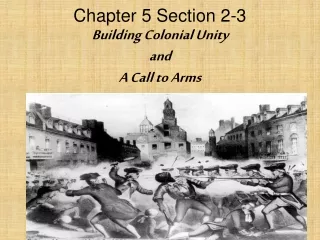
Boston Massacre March 5, 1770, colonists fired upon. Five killed, including Crispus Attucks, a former slave.
Paul Revere Boston Massacreis dramatized by his engraving.
Trial Nine soldiers are tried for murder. Defended by John Adams, Josiah Quincy Jr. All found not guilty but two.
Colonial/British Reaction Colonists boycott British goods. Parliament repeals Townshend Acts except small tax on tea.
Tea Act of 1773 Meant to help the British East India Company. Special Trade rules given. Allowed their tea price to be lower than smugglers.
Boston Tea Party December 16, 1773: Sons of Liberty, dressed as Mohawk Indians, dump 342 chests of tea into Boston Harbor.
King George III George III instructs Parliament to pass a series of Acts known as the Coercive Acts.
Intolerable Acts Coercive Acts: Closed Boston Harbor. Required Bostonians to pay for damages. Banned town meetings. Colonists so angry, they called measures The Intolerable Acts.