Download
1 / 12
120 likes | 216 Views
Learn about the Neotropical Waterbird Census, its aims, and benefits to waterbird conservation and wetlands. Explore population estimates, changes in numbers, distribution, and more. Engage with partners and the public for better communication. Discover future data needs and network expansion.

E N D
Why IWC? (2007 onward) • Aims of IWC • Benefit the conservation of waterbirds & wetlands • Estimate population sizes of waterbirds (in a better way) • Describe and explain changes in numbers and distribution • Assess importance of sites as elements of networks • Communicate this information to partners and the public in appropriate ways
Global IWC schemes since 1967 14,000+ volunteers 100+ countries 4 regions +1?
IWC network and organisation IWC coordinators: - IWC Database- regional reports National Coordinators:- National database - National reports Counters: - site-based- mid-winter- ‘look-see’ survey Illustration: Albert Beintema
Regions used in WP&SWA for analysis BA/NO = Baltic/Nordic CE = Central Europe EM/BS = East Mediterranean/Black Sea NW = North Western Europe SWA = Southwest Asia
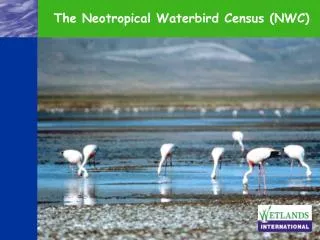
Neotropical Waterbird Census • Information from Daniel Blanco 05-09-06 • Time countries in 2005 • 1660 sites since 1990 • 626 sites in 2004 • Most sites (725) in Argentina; • - other countries 42-225 sites • Geographic (point) coordinates for 69% of sites
Waterbird Population Estimates Waterbird population Estimates 1994-2002
It’s finished! Waterbird population Estimates 2006
Future developments • Future data needs • Assess importance of sites as elements of networks • Counts from migration seasons • Counts from breeding season (colonial species) • Population boundaries and life-cycle data
Future developments • Who are our partners? • Wetlands International networks • Other NGOs - BirdLife • Scientific and Academic • Policy makers – Governments • MEAs • Avian Influenza experts • Site managers • General public – everybody! • How best to communicate with them? • Better diversity of outputs • Proper use of the www and GIS
Thank you for your attention Photo credits:Gernant Magnin, Johan Verbanck, Nick Davidson, Ali El Hili