Understanding DA and RT Demand Dynamics in Energy Dispatch
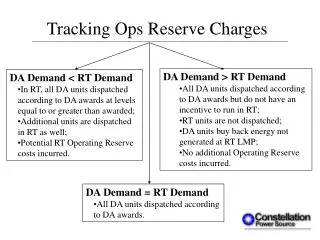
This document provides an overview of how Day-Ahead (DA) and Real-Time (RT) demand interact in energy markets. It highlights that all DA units are dispatched according to awards, but may not have incentives to operate in RT. Notably, additional units may be dispatched in RT under various conditions, potentially incurring extra operating reserve costs. Key points include the relationship between DA and RT demand, energy buy-backs, and the operational costs tied to reserve requirements.

Understanding DA and RT Demand Dynamics in Energy Dispatch
E N D
Presentation Transcript
Tracking Ops Reserve Charges • DA Demand > RT Demand • All DA units dispatched according to DA awards but do not have an incentive to run in RT; • RT units are not dispatched; • DA units buy back energy not generated at RT LMP; • No additional Operating Reserve costs incurred. • DA Demand < RT Demand • In RT, all DA units dispatched according to DA awards at levels equal to or greater than awarded; • Additional units are dispatched in RT as well; • Potential RT Operating Reserve costs incurred. • DA Demand = RT Demand • All DA units dispatched according to DA awards.