Download

1 / 14
140 likes | 268 Views
This project aims to design a neonatal ventilation device that ensures effective ventilation for patients under one year of age in emergency situations, requiring minimal user interaction and adaptable to various environments. Given the high rates of pediatric emergency visits and the prevalence of respiratory conditions in infants, our device must prioritize safety, portability, and compliance with ISO standards while delivering sufficient oxygen. Our proposal outlines the project’s goals, timeline, current status, and future plans, addressing the critical need for a reliable emergency ventilator for neonates.

E N D
Auto Bag Jerome H. Santoyo Jessica S. Yeager Advisor: Richard Fries Vanderbilt University Dept. of Biomedical Engineering
Outline • Goal • Project Background • Timeline • Current Status • Future Plans • Questions
Goal • To Design a device that can be used to ventilate a neonatal patient (< 1 year of age) in an emergency situation without regard to user interaction or environmental situation
The Facts... • In 1992-1994, there was an average of 91,155,000 emergency department visits per year. • Of these visits, 10.2% were for children < 3 years of age. • In 1993-1995, the rate of ambulatory care visits among infants under 1 year of age was four times the rate of children 5-14 years of age. (815 vs. 204 visits per 100 children per year)
More Facts… • In 1995, respiratory diseases accounted for 40% of all hospital discharges. • There were 3.7 million live births in the United States, excluding New York in 1992. • In 1992, 22.9% of all these live births received assisted ventilation for some length of time. • Of these births, 34% received assisted ventilation for more that 30 minutes. • In 1992-1994, payments averaged $8.6 billion for pediatric emergency departments per year.
Our Criteria • Delivers sufficient O2 to infant • Does not cause harm to either patient or caregiver and is safe • Is portable • Accommodates neonatal patients (< 1 year of age) • Requires minimal attention after being setup for use • Meets ISO standards
Preliminary ISO Standards • Alarm Testing • high-pressure alarms • breathing circuit integrity alarms • power failure alarms • high and low oxygen alarms • Variables which must be displayed • cycling pressure • end-expiratory pressure • delivered concentration of oxygen
What is Currently Available? • Manual Ventilator • Automatic Ventilators • Conventional Mechanical Ventilation (CMV) • High Frequency Oscillation (HFV) -High Frequency Positive Pressure Ventilation (HPPV) -High Frequency Jet Ventilation (HFJV) - High Frequency Oscillation (HFO)
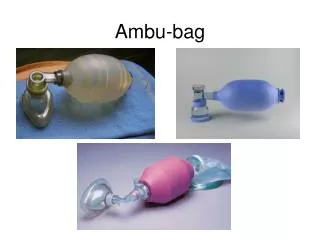
Presenting Our Black Box Design CLU Auto Hand Sensors Pop-Off Valve Ambu Valves Reservoir Ambu Valves Mask
Black Box Characteristics Sensor Characteristics Sensitive Reliable Effective Does Not Interfere W/ Flow Small Lightweight Auto Hand Characteristics Lightweight Does Not Interfere With Manual Bagging Reliable Effective Durable CLU Characteristics Lightweight Reliable Fast Effective