Download
1 / 17
170 likes | 325 Views
This text explores the concepts of ecological and geological time scales, providing insight into the life spans of organisms (0-10,000 years) and the extensive time frames of geological processes (millions of years). It discusses the hierarchical classification system introduced by Linnaeus, emphasizing the connection of taxa and the importance of binomial nomenclature for species identification. Furthermore, it delves into phylogeny, examining how evolutionary history is traced through morphological traits, including primitive and derived characters, and highlights the role of horizontal gene transfer in diversification among organisms.

E N D
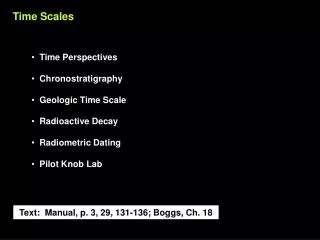
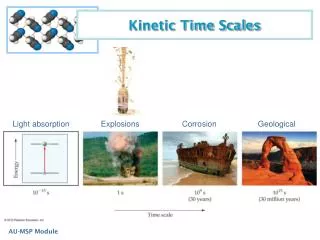
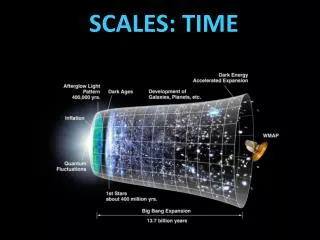
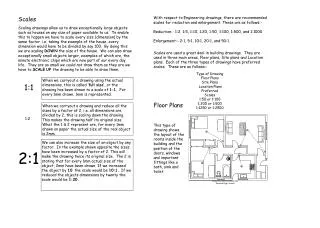
Time Scales • Ecological Time - refers to time scales reflective of life spans of organisms and periods of environmental change (usually 0-100 years; can be expanded up to 10,000 years) • Geological Time - relates to the time frame over which geological processes occur (millions of years). Relevant to macroevolution
Taxonomy • Linnaeus’ hierarchical system of classification reflects evolutionary relatedness • The farther down you go in a hierarchy (e.g., phylum class family), the more closely related members of that group • Groups at any level can be referred to as taxon (plural taxa)
Binomial System of Nomenclature • Two word name that is unique to a species • Ursus americanus • Ceanothus americanus • Not a species without both names
Domains • Similarities evident (principle of continuity and signature principle) • Differences reflect evolutionary divergence (how long ago they split)
Phylogeny • The evolutionary history of a species or a group of related species • Used to track the relatedness of organisms over geological time
Morphology is an Important Part of Studying Phylogenies • Primitive characters - morphological features that are present in a recent species and are also found in an ancestral species • Derived characters - features present in a recent species but not in an ancestral species. Developed through evolution
Phylogeny based on sequences encoding the protein cytochrome oxidase subunit II.
A Mechanism for Diversification • Horizontal (or lateral) gene transfer • Transfer of genes between different species • Common between prokaryotes • Prokaryotes to eukaryotes • Eukaryote to eukaryote – less common