Download
1 / 8
90 likes | 223 Views
This project explores the nitrate levels in the Mohawk River, highlighting the importance of maintaining acceptable nitrate concentrations, which should be around 1 ppm in freshwater. Elevated levels (over 3 ppm) can be harmful, leading to issues like algal blooms, dead zones, and health risks such as methemoglobinemia in humans. The research identifies sources of nitrates, including agricultural runoff and septic systems, and suggests solutions for balancing nitrate levels, emphasizing the role of nitrogen-fixing bacteria in the ecosystem.

E N D
Mohawk River Water Testing Project (Nitrates) Aaron Gordon, Chris Brown, Dan Nicoletta, Jordan Rutherford
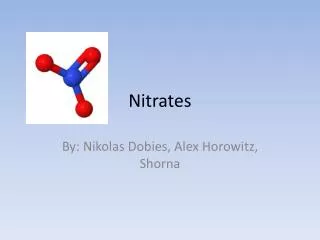
Chemical Formula • NOз-
Acceptable Ranges of Nitrates in Nature • The acceptable range in freshwater is about 1 ppm. Anything over 3 ppm can be dangerous.
Sources of Nitrates from Nature or Pollution • Possible sources include surface runoff from agricultural or landscaped areas, the use of excess nitrate fertilizer and is often a byproduct of septic systems.
Problems Caused by Excess or Lack of Nitrates in a Water System • Excess of nitrates may cause algae blooms, water anoxia, dead fish, dead zones, eutrofication and in humans can cause blue baby syndrome, death and can change hemoglobin to methemoglobin. • If not enough nitrate is present, plants will not be able to grow.
Ways to Alleviate any Imbalance of Nitrates in a Water System • Ways include increasing plant density
What is the Purpose of Nitrogen Fixing Bacteria? • Recycle nitrogen in an ecosystem • These bacteria take nitrates in the soil and convert them into nitrogen, which is usable by plants.