Download
1 / 7
70 likes | 171 Views
Learn how populations become isolated, adapt to their environments, and eventually give rise to new species through genetic differences accumulating over generations. Discover the role of geographic, behavioral, and temporal isolation in speciation.

E N D
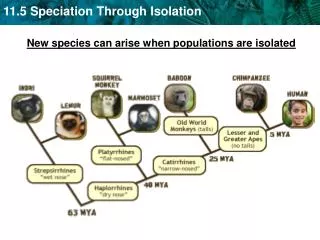
Populations become isolated when there is no gene flow. • Isolated populations adapt to their own environments. • Genetic differences can add up over generations.
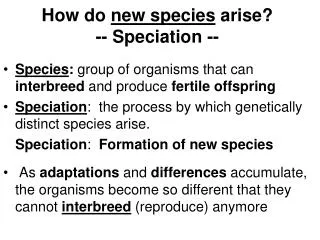
Speciation - the rise of two or more species from one existing species.
Geographic Isolation- physical barriers divide population and prevent mating.
Behavioral Isolation- differences in courtship or mating behaviors and prevent mating.
Temporal Isolation- timing of reproductive periods prevents mating. Western Spotted Skunk Eastern Spotted Skunk
Leads to… Reproductive Isolation-members of different populations cannot mate successfully.