Download
1 / 2
20 likes | 152 Views
This research explores the rational design of novel polymer materials, specifically electrostatic-driven complexes, to improve gene delivery mechanisms. By altering polylysine into a comb architecture, the binding efficiency of DNA is enhanced, resulting in better protein expression and reduced cytotoxicity in live cells. The project merges experimental techniques with atomistic simulations to optimize DNA-polymer interactions, aiming to develop effective treatments for genetic disorders like Alzheimer's and Parkinson's. This collaborative effort also focuses on enhancing diversity in STEM through mentorship and training.

E N D
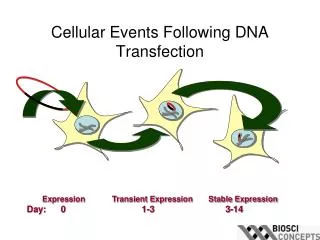
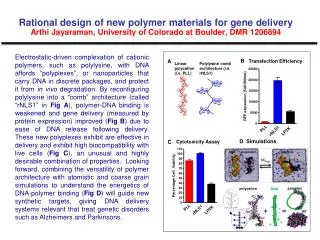
Rational design of new polymer materials for gene deliveryArthi Jayaraman, University of Colorado at Boulder, DMR 1206894 Electrostatic-driven complexation of cationic polymers, such as polylysine, with DNA affords “polyplexes”, or nanoparticles that carry DNA in discrete packages, and protect it from in vivo degradation. By reconfiguring polylysine into a “comb” architecture (called “rNLS1” in Fig A), polymer-DNA binding is weakened and gene delivery (measured by protein expression) improved (FigB) due to ease of DNA release following delivery. These new polyplexes exhibit are effective in delivery and exhibit high biocompatibility with live cells (Fig C), an unusual and highly desirable combination of properties. Looking forward, combining the versatility of polymer architecture with atomistic and coarse grain simulations to understand the energetics of DNA-polymer binding (Fig D) will guide new synthetic targets, giving DNA delivery systems relevant that treat genetic disorders such as Alzheimers and Parkinsons. B A Transfection Efficiency + + + + + + + + + + + + + + + + + + + + D Simulations C Cytotoxicity Assay polyplex polycation DNA Polylysine comb architecture (i.e. rNLS1) Linear polycation (i.e. PLL) + + + + polyplex polycation DNA + + + + + + + + + + + + + + + +
Rational design of new polymer materials for gene deliveryArthi Jayaraman, University of Colorado at Boulder, DMR 1206894 Broader Impact: Unique aspects of this project include emphasis on a close connection of simulation with experiment in a collaborative effort. The project further enhances cyber-enabled research, while recruiting and mentoring female and minority scientists. Cyber infrastructure- Sharing electronic lab notebooks by DropboxTM Inter-disciplinary training – Twice per year hosting of the researchers at the collaborator’s institution Engaging minority researchers with opportunities in graduate research, Research Experience for Undergraduates (REU), and connection to NOBCChE Collaborative theory/experimental research as a unique training platform