Solid State Drive
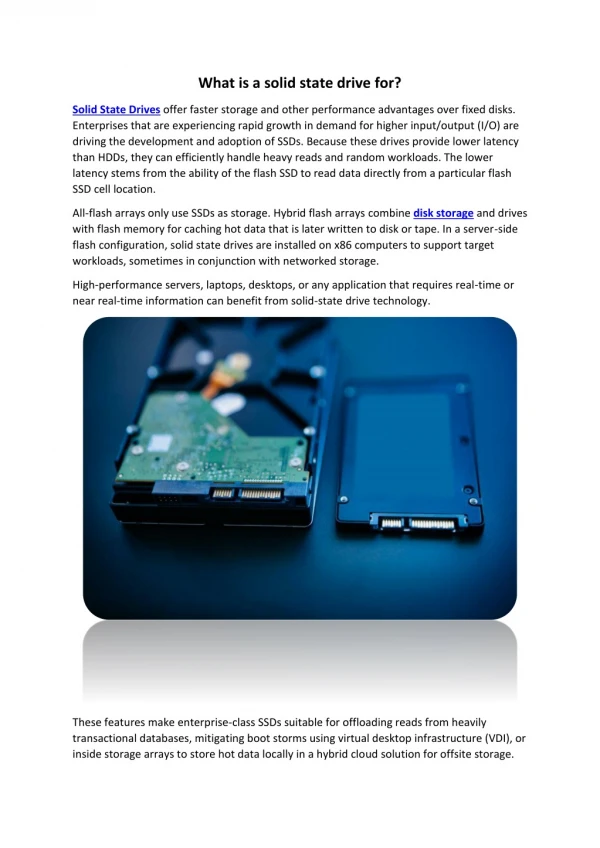
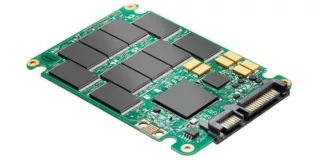
Solid State Drives (SSDs) offer numerous advantages in terms of performance and reliability, especially in portable environments. Key benefits include no moving parts, faster startup times, extremely low read latency, and deterministic read performance unaffected by data location. However, SSDs also have disadvantages like significantly higher costs per GB and limited write/erase cycles. In addition, while low-capacity SSDs are energy efficient, higher-capacity options can consume more power. Understanding these factors is crucial for making informed decisions in storage solutions.

Solid State Drive
E N D
Presentation Transcript
Advantages • Reliability in portable environments and no noise • No moving parts • Faster start up • Does not need spin up • Extremely low read latency • No seek time (25 us per page/4KB) • Deterministic read performance • The performance does not depends on the location of data
Disadvantage • Cost significantly more per unit capacity • 3$/GB vs. 0.15$/GB • Limited write erase time • 100000 writes for SLC (MLC is even fewer) • high endurance cells may have an 1-5 million • But some files still need more • Weaver leaving to spread writes all over the disk • Slower write speeds because of the erase blocks are becoming larger and larger(1.5 ms per erase) • For low capacity flash SSDs, low power consumption and heat production when in active use. High capacity SSDs may have significant higher power requirements
Improve write performance • OS write caching • Flash specific file system • Drive Write Caching • Multiple concurrent erase blocks • Expensive: 200~400$ /GB
Bandwidth and interleave • Without interleaving • For read: 25+100 us per page • 8000 reads/s = 32MB/s • For write: 200+100 us per page • 3330 writes/s = 13 MB/s • With interleaving • For read • 10000 reads/s = 40MB/s • For write • 5000 writes/s = 20 MB/s
An example of SSD • 1 die = 4 planes • 1 plane = 2048 blocks • 1 block = 64 pages • 1 page = 4KB • Dies can operate independently • Reading and programming is performed on a page basis, erasure can only be performed on a block basis.
Read • 25μs from page to data register • 100μs transfer in the serial line • Write • Page granularity • Sequentially with in a block • Block must be erased before writing • 200μs from register into flash cells
Block erasure: • The erase state: 0xFF or 0x00 • 1.5ms ( 25μs for reading a page) • Finite number of erase-write cycles • Cleaning: • Erase out-of-date pages • Garbage collecting
Flash File System: • ZFS, has be optimized • JFFS2