Hyperbaric Oxygen Therapy: Benefits and Precautions
110 likes | 206 Views
Hyperbaric oxygen therapy involves exposing the patient to high breathable oxygen environment, benefiting wound healing, sprains, and more. Learn its theory, biophysical effects, precautions, and administration details.


Hyperbaric Oxygen Therapy: Benefits and Precautions
E N D
Presentation Transcript
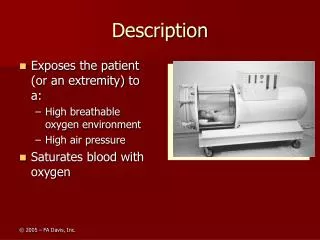
Description • Exposes the patient (or an extremity) to a: • High breathable oxygen environment • High air pressure • Saturates blood with oxygen
Used For • Wound healing • Soft tissue healing* • Sprains • Strains • Contusions • Inflammation • Delayed onset muscle soreness • Following cerebral strokes • Treatment of the Bends * Efficacy as not been substantiated
Theory • High air pressure decreases the size of gas bubbles in the blood • 2 to 3 times that of normal air pressure • High oxygen (100%) intake saturates the blood plasma with oxygen • Net increase in oxygen delivered to healing tissues • Decreases hypoxia • Increases phagocytic and fibroblastic activity
Biophysical Effects Blood Flow • Increased oxygen levels cause vasoconstriction • Net increase in oxygen delivered to the tissues • Maybe especially beneficial to avascular structures: • Achilles’ tendon • Rotator cuff
Biophysical Effects Wound Healing • Improved by: • Oxygen accelerating phagocytosis • Decreasing hypoxia • Antimicrobial effect • Increased ATP levels
Biophysical Effects Tissue Regeneration • Improved wound healing assists tissue regeneration • Increased rate of fibroblast proliferation • Also used for: • Fracture healing • Reducing delayed onset muscle soreness • Lacking clinical evidence
Precautions • Hyperbaric oxygen therapy should only be administered by trained personnel • Too great of pressure may rupture the tympanic membrane • Increased risk with an inner ear infection • Decongestants may help prevent this • Can increase the output of bodily gasses
Contraindications • Pregnancy • Inner ear infection • Tympanic membrane rupture • Upper respiratory infection • Sinus conditions • Lung disease • Asthma • Seizure disorders • Optic neuritis • Pneumothorax • Claustrophobia
Instrumentation Chamber • May hold one or more people Oxygen Administration • Treatments administered at 95 to 100% O2 • Oxygen delivered via an air mask Pressure • Adjusts the chamber temperature from 1 to 3 atmospheres
Treatment Duration • Using 100% oxygen and 2.5 atmospheres: • 90 to 100 minutes Or • 3 30-minute session • The patient is exposed to normal air and air pressures between sessions
Maintenance After Each Use: • Clean the interior of the chamber • Clean or replace the oxygen mask As Indicated: • A qualified technician should: • Calibrate the pressure gauge • Inspect and repair the unit