Download
1 / 9
90 likes | 203 Views
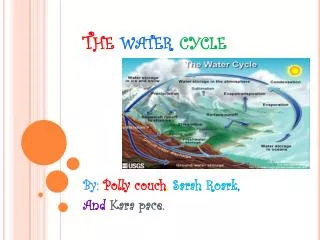
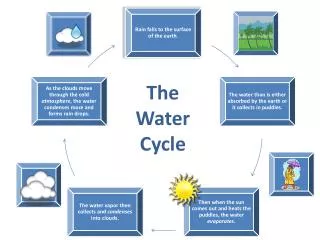
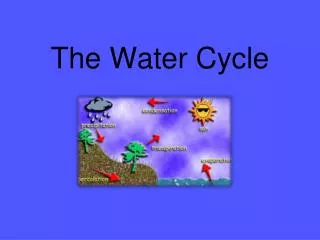
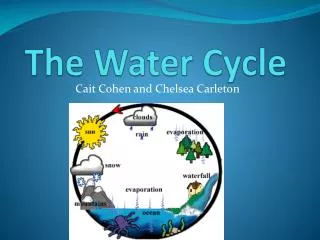
Explore the essential processes of the water cycle with this informative PowerPoint guide. As you go through the presentation, fill in your note packet by observing the key terms highlighted in red that are missing from your notes. Learn how evaporation, condensation, precipitation, runoff, and transpiration work together to form a continuous cycle that does not have a distinct beginning or end. This engaging material will help you grasp the importance of each process in the water cycle and its impact on our environment.

E N D
Directions • As we go through this PowerPoint, it is your responsibility to fill in your note packet. Notice all of the red words are MISSING from your notes.
Remember the water cycle does NOT have a beginning or an end.
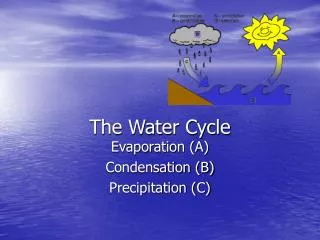
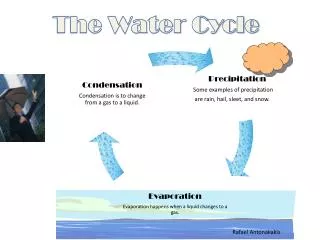
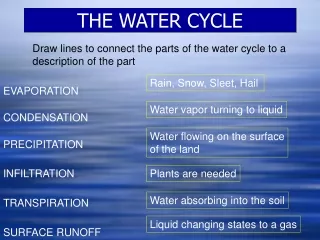
The Water Cycle • Evaporation is the process by which water molecules in liquid water escape into the air as water vapor. Water vapor is also added to the air by living things. Evaporation
The Water Cycle • Condensation is the process by which molecules of water vapor in the air become liquid.
The Water Cycle • Precipitation is any form of water that falls from clouds and reaches Earth’s surface.
The Water Cycle • Runoff is the movement of landwaterto the oceans, chiefly in the form of rivers, lakes, and streams.
The Water Cycle • Transpiration is a process similar to evaporation. It is a part of the water cycle, and it is the loss of water vapor from parts of plants (similar to sweating), especially in leaves but also in stems, flowers and roots.