The U.S. Home Front during WWII: Mobilization and Economic Shifts
80 likes | 190 Views
Before World War II, most Americans favored isolationism, but as the war progressed, the U.S. shifted gears to support the Allies. The Neutrality Acts restricted trade, while the Lend-Lease Act of 1941 authorized aid to nations vital to U.S. security. The war prompted peacetime drafts and mobilization of the home front, with organizations like the Office of Civilian Defense encouraging citizen involvement. The economy transformed dramatically, with increased industrial production, wage controls, and rationing of essentials. Women's roles shifted, despite challenges around job security and pay equality.


The U.S. Home Front during WWII: Mobilization and Economic Shifts
E N D
Presentation Transcript
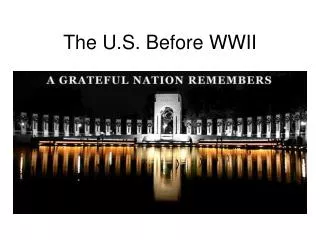
Pre-WWII U.S. Action • Most Americans wanted to stay neutral/isolationist • Neutrality Acts – U.S. would withhold weapons and loans from nations at war; nonmilitary goods must be paid in cash “cash & carry” • 1st peacetime draft in 1940: Selective Service Act
Lend-Lease Act • Congress passes in March 1941 – FDR could aid any nation whose defense he believed was vital to American security • U.S. began sending aid to Great Britain • “Great arsenal of democracy”
Mobilizing the Home Front • Desire to win war for FDR’s 4 Freedoms: Speech, Worship, Freedom from want & freedom from fear • OCD – Office of Civilian Defense: asked citizens to volunteer an hour a day for the cause • Victory Gardens & recycling
Office of War Information • Coordinated war info to distribute to American public • Hollywood creates movies in patriotic spirit & stores emphasize conserving
War Production • War Production Board (WPB) created in Jan. 1942 • Limits production of non-military goods; switch to military production • Convince business to increase production; the gov’t often paid businesses for it • Industrial production almost doubles
Wartime Economy • GNP rises dramatically during war • Employment rises; demand rises; inflation ? • National War Labor Board (NWLB): controls wages & monitors inflation • Office of Price Administration (OPA): put price ceilings on goods • Rationing – meat, butter, gasoline
Cost of War • WWII cost 10 times more than WWI • Starts modern tax structure with income tax & corporate taxes • Gov. sold bonds to American public to borrow $ for war costs (taxes paid rest)
Workers • No-strike pledge • NWLB settled disputes • 15 million workers leave for military service; jobs filled by unemployed, and women • Women got paid less, less job security, treated poorly