Download

1 / 15
150 likes | 282 Views
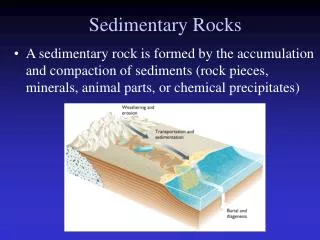
Sedimentary rocks constitute about 75% of Earth’s surface and are formed through the processes of weathering, erosion, deposition, compaction, and cementation of fragments from other rocks. They can originate from metamorphic, igneous, or existing sedimentary rocks. The three main types include clastic (formed from rock fragments), nonclastic (resulting from chemical deposits), and organic (derived from living organisms). Notable examples include conglomerate, sandstone, shale, halite, limestone, and coal, each showcasing unique attributes and formation processes.

E N D
Day Lecture 2 Notes Date Sedimentary Rocks - rocks that are the result of the processes of weathering and erosion. - account for 75% of the rocks exposed at Earth's surface
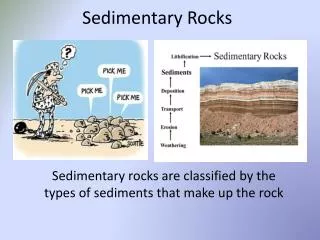
Sedimentary rock comes from fragments of other rocks that have been weathered, eroded,deposited, compacted, and cemented
- can be formed from metamorphic, igneous or other sedimentary rocks
Three types of sedimentary rocks 1. Clastic Sedimentary Rock - sedimentary rocks that have been formed from the fragments - clastic comes from the Greek word klastos which means "broken”.
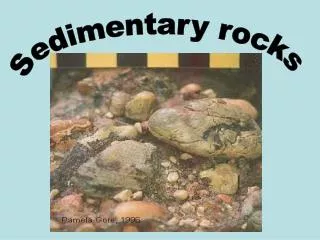
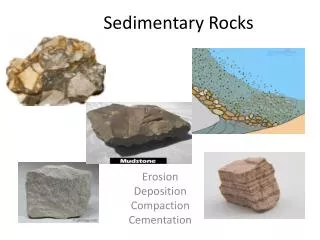
- Conglomerate rocks are made of large rock pieces that have been cemented together. * When looking at this rock type, you can easily see the parts that it has been made of.
- Sandstone rocks are made of fine sand grains * sand has been cemented together. Rubbing the surface of sandstone rocks may result in small grains of sand being rubbed off of the rock.
-Shale is made up of very fine grains of clay *The texture of shale is very smooth to the touch and can be broken with your hands
2. Nonclastic Sedimentary Rock - is sedimentary rocks resulting from chemical deposits. - can be rock that formed when water evaporated and left behind minerals.
- Halite or Rock Salt is a rock that forms as water evaporates leaving the crystals to form a solid *Stalagmites and Stalactites form as mineral rich water runs off or runs onto them
3. Organic Sedimentary Rocks - formed from the life processes of living organisms or the remains of the organisms. - Limestone that is formed from the shells of clams and other organisms is organic
- Coal is made from plants that died in swamps millions of years ago. * Coal therefore is another example of organic rocks.