Download
1 / 13
130 likes | 134 Views
GOI recently slashed the high import duties on cotton till September 30 this year. It is widely expected that this step will bolster the availability of cotton at highly competitive rates. Read this blog to find out how spinning mills will benefit from this government policy.

E N D
Introduction • The Australia-India ECTA will bolster textile exports significantly through preferential market access • Another important update is the removal of import duty on cotton for a period of five-and-a-half months • Right from spinning mills to cotton suppliers and spinning canmanufacturers, the news of cotton import duties being slashed opens up a plethora of benefits • Let us here take a look at how slashing the cotton import duty can affect spinning mills.
AVAILABILITY OF COTTON AT COMPETITIVE RATES • To stay competitive, the Indian textile sector needs the support of favourable government policies • The news of cotton import duties being slashed has come as a welcome one in this regard • It is widely expected that this policy shift will bolster the availability of cotton at highly competitive rates • As a result of the removal of the import duties, cotton imports in the domestic markets will significantly ease.
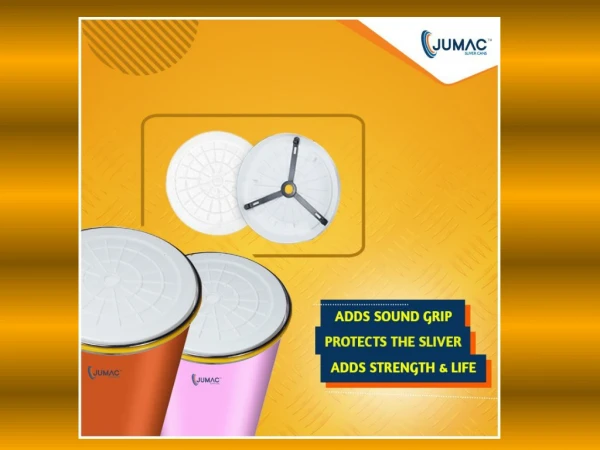
2. DIMENSIONAL ACCURACY & OPERATIONAL EFFICIENCY • Randomly selected spinning can and accessories are not able to maintain the accuracy levels required for high-quality yarns • So, mill-owners should go with high-density polyethylene (HDPE) sliver cans • When spinning cans are not carefully chosen, there is a relatively high risk of sliver damages • The top sliver can manufacturers, like Jumac Cans, help their clients eliminate such risks.
3. A BUFFER AGAINST COTTON PRODUCTION UNCERTAINTIES • At present, there is a 5% AIDC cess (Agriculture Infrastructure Development cess) on cotton imports • A further 5% import duty is levied as Basic Customs Duty (or, BCD) • In a country like India, where sudden & unseasonal rainfall often affects cotton production • High import duties serve as roadblocks for both domestic & international buyers, and for the textile sector as a whole.
4. BOOSTING SPINNING MILL PRODUCTIVITY & OUTPUT • As cotton prices have been increasing in the domestic markets, the productivity and cash flows of spinning mills are getting adversely affected • In the last few months, the ICS-105 cotton variety witnessed a price rise of around 70% • The falling production levels at mills were impacting the demand for spinning machinery and HDPE spinning can & accessories • The removal of cotton import duties will significantly ease the liquidity problems that Indian mills are facing at present.
5. DOING AWAY WITH COTTON HOARDING HABITS • The high cotton prices had, over the last few quarters, given rise to cotton hoarding tendencies among many domestic players • The frequent rises in cotton prices were threatening to stunt the growth of the Indian textile & yarn industry • With the duties no longer in place, yarn & fabric production would benefit from the lower material costs • Malaysia and Dubai are expected to grow, and India would once again be able to stand out as a force to reckon with in the global textile industry.
6. VITAL STEP TO SAVE FROM CRITICAL SITUATION • The scrapping of the cotton import duties has come as a timely step for preventing a major crisis for the industry as a whole • Indian yarn & textile industry not being able to meet commitments of advance orders because of high cotton price • The uncertain political climate (for example, the conflict between Russia and Ukraine) is also causing unique problems • The slashing of the import duties on cotton will help in more effective material price management and higher operations.
7. MANIFOLD BENEFITS FOR THE ENTIRE VALUE CHAIN OF TEXTILES • From spinning mill operations and sustaining day-to-day workflow efficiency levels • Fabric/yarn manufacturing • Demand for spinning can products • Removal of the high import duty of cotton will benefit the Indian textile sector • The Indian textile sector is recovering well from the pandemic-induced slowdowns • Apart from the textile sector and spinning mills, the fast-rising prices of fuel and food are causing concern as well • The import duty cut will help in stabilising the sector and helping in the post-pandemic recovery.
8. Removal Of Cotton Import Duty – Truly A ‘Stitch In Time’ • With the prices of locally produced cotton zooming past the international figures, the Indian textile sector has been hemorrhaging for some time now • The policy change will offer a much sought-after breather for the domestic textile and yarn production sector • The removal of cotton import duties may not immediately bring down the prices • Going forward, things like tighter MCX trading parameters and compulsory disclosure of stocks will help matters further.
Jumac smart can technology is presented in a comprehensive and user-friendly way to facilitate the operations. Utilization of this smart can technology will be a core competence of the mills in the near future, adding a competitive edge. - From an expert
Thank You! Contact us: Jumac Manufacturing 21, C.R. Avenue, Kolkata - 700071, India
Get Additional Info on How Slashing The Import Duty On Cotton Is Likely To Affect Spinning Mills