Download
1 / 3
30 likes | 162 Views
The article examines the shortcomings of Accountable Care Organizations (ACOs), highlighting the absence of patient responsibility and incentives within the model. It critiques the top-down government approach aimed at reducing healthcare spending, which is seen as unlikely to meet its goals. Regulatory micro-management has drawn criticism from the private sector, as audits and oversight are perceived as intrusive. The initial successful ACO model, based on studies of large medical groups, may not translate well to varied healthcare settings. With participation projected at only 7%, local acceptance remains questionable.

E N D
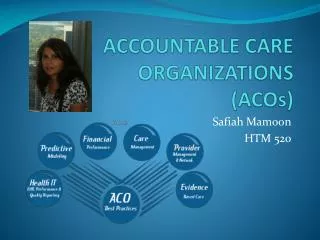
Accountable Care Organizations III WSJ Article
ACO’s • Patient responsibility and incentives are absent in the ACO model? • Top down government plan to cut healthcare spending viewed as having a low probability of reducing cost or achieving government goals. • Regulatory micro-management associated with the ACO’s found offensive by the private sector. • Audits and site visits – inspection of all books, contracts, records, documents, and other evidence seen as a legal risk and intrusion on private sector businesses. • The ACO model was based on studies of ten large, sophisticated, high performing medical groups in 2005. It may not function well in other settings.
ACO’s Discussion Take-Aways • Level of participation is projected to be 7%. • History of managed care, capitation, and HMO’s in Alaska indicates low probabilities of local acceptance? • Patient incentives to remain in network are absent? Incentives for compliance with medications and physicians orders are absent? Incentives for the adoption of healthy lifestyles are absent? Incentives to reduce demand for expensive end-of-life care? • Few governing bodies are expected to gamble with the future of their organizations and invest significant capital on an ‘experimental model of care’.