Understanding Natural and Synthetic Colorants in Food: Differences, Effects, and Safety Concerns
This text explores the differences between dyes and pigments, the reasons for the coloration in these compounds based on their interaction with light, and examples of natural pigments found in common foods. It discusses the safety concerns surrounding synthetic colorants due to varying regulations across countries and their potential link to health issues such as hyperactivity in children. Natural pigments like anthocyanins and carotenoids are covered, including their susceptibility to oxidation and the effects of metal ions on their color.

Understanding Natural and Synthetic Colorants in Food: Differences, Effects, and Safety Concerns
E N D
Presentation Transcript
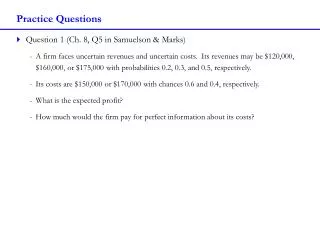
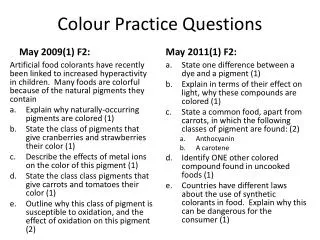
Colour Practice Questions May 2009(1) F2: May 2011(1) F2: State one difference between a dye and a pigment (1) Explain in terms of their effect on light, why these compounds are colored (1) State a common food, apart from carrots, in which the following classes of pigment are found: (2) Anthocyanin A carotene Identify ONE other colored compound found in uncooked foods (1) Countries have different laws about the use of synthetic colorants in food. Explain why this can be dangerous for the consumer (1) Artificial food colorants have recently been linked to increased hyperactivity in children. Many foods are colorful because of the natural pigments they contain • Explain why naturally-occurring pigments are colored (1) • State the class of pigments that give cranberries and strawberries their color (1) • Describe the effects of metal ions on the color of this pigment (1) • State the class class pigments that give carrots and tomatoes their color (1) • Outline why this class of pigment is susceptible to oxidation, and the effect of oxidation on this pigment (2)
Colour Practice Questions May 2009(1) F2: Key They reflect/absorb different wavelengths of light Anthocyanins Metals form complexes which discolor anthocyanins Carotenoids They have double bonds which react easily; Oxidation causes color loss Artificial food colorants have recently been linked to increased hyperactivity in children. Many foods are colorful because of the natural pigments they contain • Explain why naturally-occurring pigments are colored (1) • State the class of pigments that give cranberries and strawberries their color (1) • Describe the effects of metal ions on the color of this pigment (1) • State the class class pigments that give carrots and tomatoes their color (1) • Outline why this class of pigment is susceptible to oxidation, and the effect of oxidation on this pigment (2)
Colour Practice Questions Key: May 2011(1) F1: State one difference between a dye and a pigment (1) Explain in terms of their effect on light, why these compounds are colored (1) State a common food, apart from carrots, in which the following classes of pigment are found: (2) Anthocyanin A carotene Identify ONE other colored compound found in uncooked foods (1) Countries have different laws about the use of synthetic colorants in food. Explain why this can be dangerous for the consumer (1) • a dye is a synthetic colouring substance and pigments occur naturally • the dye/pigment absorbs some colours/wavelengths/frequencies of light (whilst reflecting others) • (a) beetroot / red cabbage / blackcurrants / cherries / red grapes / named berries; (Accept any other correct answer, but must have specific names e.g. strawberries instead of berries.) (b) tomato / pumpkin / capsicum / bananas / squash / mango; • chlorophyll / hemoglobin / heme / myoglobin • labelling/safety regulations vary (considerably) between countries / a food produced in a country may be considered toxic in another / a toxic compound may not be banned in all countries / OWTTE