Tropical Rainforest
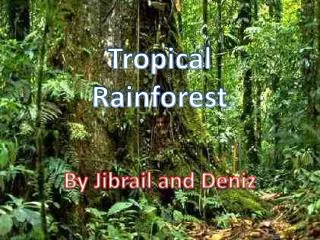
Tropical rainforests, located near the equator, are vital ecosystems home to the world's largest variety of plants and animals. They receive 60 to 160 inches of rain annually, creating a hot and humid environment ideal for flora and fauna. Biotic factors include jaguars, toucans, and rubber trees, while abiotic elements consist of sunlight and soil. However, human activities such as deforestation and tourism threaten these ecosystems. Conservation efforts are crucial to maintain biodiversity and prevent habitat destruction. Discover the beauty and importance of tropical rainforests!

Tropical Rainforest
E N D
Presentation Transcript
Tropical Rainforest Joshy Brown & Taylor Conwell
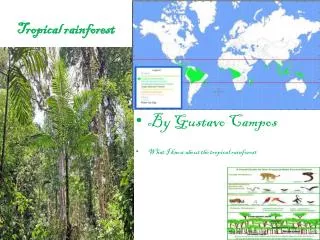
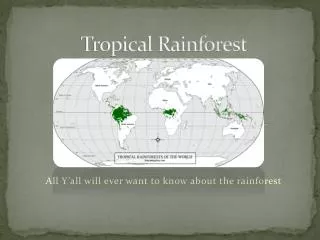
Location • Near the equator • The world's largest tropical rainforests are in South America, Africa, and Southeast Asia.
Competition for: • Sunlight • Vegetation • Warmth • Food • Adaptation • Fungus adapts in warm, dark places • Toucans use their bill to cut fruit from trees • Sloths use camouflage to survive
Climate • 60 to 160 inches of precipitation per year. • Hot and humid conditions • ideal environment for bacteria and other microorganisms.
Biotic Factors - Animals • Jaguar • Lemur • Anteater
Biotic Factors - Animals • Marmosets • Toucans
Biotic Factors – Plants • Bamboo • Tropical Fruit Trees • Rubber Trees
Biotic Factors – Plants • Lemon • Avocado
Abiotic Factors • Water • Sunlight • Temperature • Soil
Arenal Volcano, Costa Rica • Highest rated vacation spot by tourists • Very eco-friendly • Most active volcano until 2010
Arenal Volcano, Costa Rica • Hot Springs Rappelling Tram
Arenal VolcanoEffects of the Tropical Rainforest • Negative Effects • Clearing of trees for hotels, roads, etc • Environmental costs of ecotourism • Visitor overcapacity • “Profit over preotection” • Positive Effects • Interest in location history • Encourages individual conservation efforts
Human Impact Destroy habitats Use of fruit and trees Hunting Clearing trees for personal space