Download
1 / 9
150 likes | 617 Views
This text delves into the complexities of deontological theories, notably those proposed by Immanuel Kant and David Ross. It discusses the challenges posed by such theories, particularly regarding the foundations of rights and moral rules. Additionally, it analyzes how consequentialism can inform our understanding of rights while addressing criticisms from Bernard Williams, such as its demand on moral agents and potential alienation. The piece also examines contractarianism as a framework for moral rules but highlights its limitations in inclusivity and practicality. ###

E N D
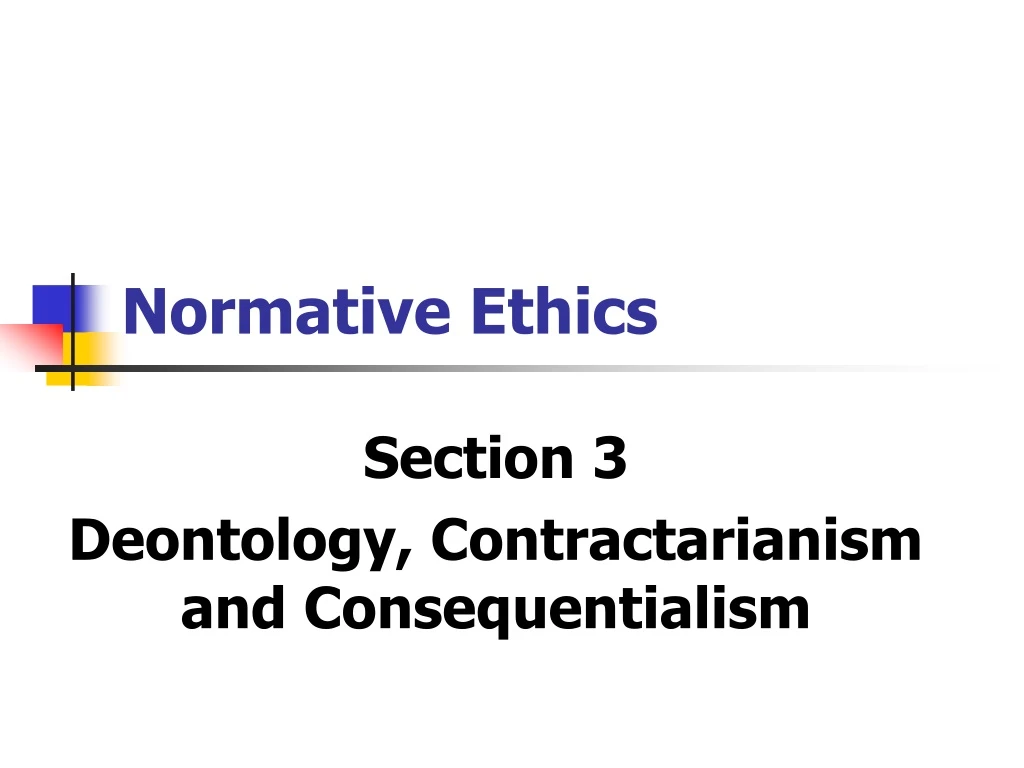
Normative Ethics Section 3 Deontology, Contractarianism and Consequentialism
Deontological Theories • Normative theories not based on consequences. • Immanuel Kant • David Ross Consider how the deontological theories of Kant & Ross could be problematic.
Fundamental principles. Thought to require deontological theory. But… rights can be said to emerge from moral rules with a consequentialist underpinning. Rights Consider how consequentialism can inform belief in rights.
Criticisms of Consequentialism Bernard Williams: (1.) overdemanding (2.) alienates agents from their integrity.
Replies (1.)Consequentalism can provide for supererogation (rather than making it obligatory to maximise value). (2.) Does not alienate agents more than any other theory.
Avoids alienating agents from their relationships. Upholds relationships. Not committed to excessive self-sacrifice. Subjective consequentialism treats maximising as a decision-procedure to be employed recurrently. Objective Consequentialism
Distributive justice: consequentialism can prioritize the satisfaction of needs. Corrective justice: consequentialism can justify retributive practices through their benefits to society. Justice & Consequentialism
Contractarianism • Moral rules are based on what rational, self-interested individuals would (in certain circumstances & under certain constraints) choose or contract into.
Problems • Does not provide for those unable to enter into a contract, including - unborn generations - animals - some humans. • Problem of abstractness. • Consequentialist theories remain preferable.