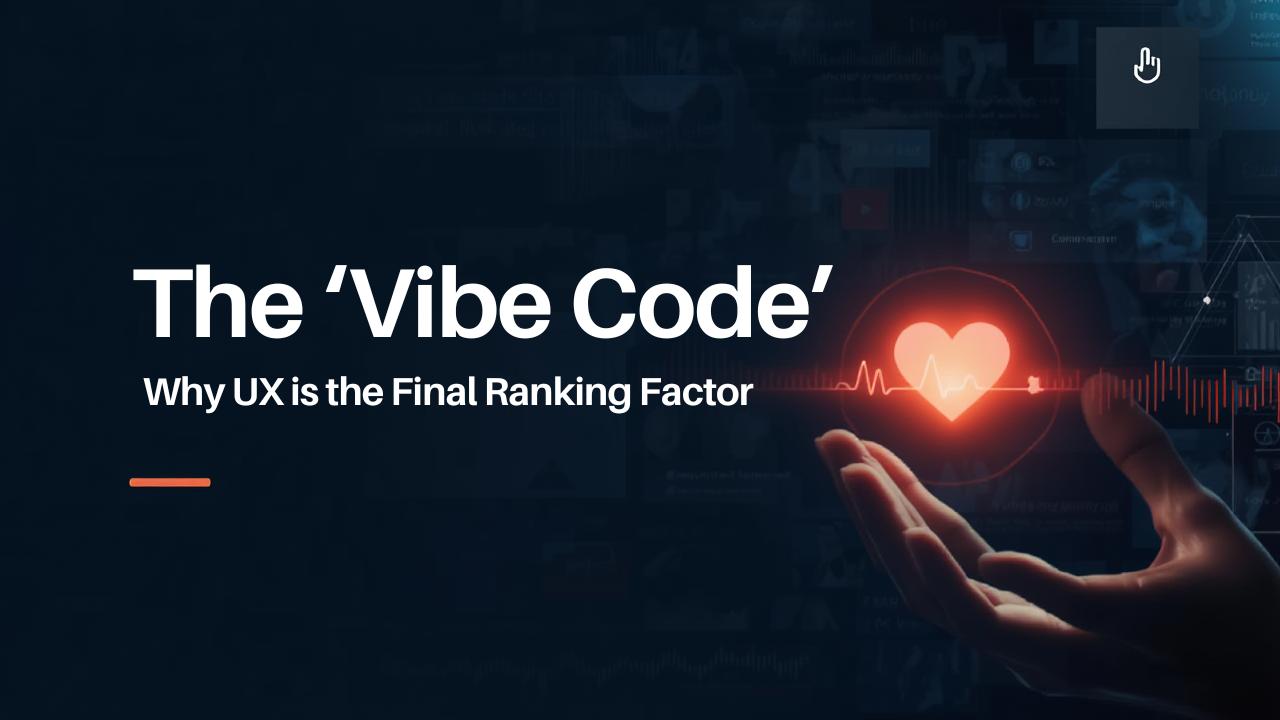
Google's ranking algorithms have evolved far beyond keywords and backlinks. In 2026, the deciding factor isn't just whether your site performs well—it's whether it feels human, trustworthy, and intentional. At our SEO agency in Chennai, we've watched countless clients climb rankings by perfecting what we call the "Vibe Code": the invisible layer of emotional UX that separates winners from the rest.
Here's the uncomfortable truth: optimizing for Core Web Vitals alone won't cut it anymore. Your site needs to pass the "human test."
The Content Gap: Beyond Speed Metrics
Technical SEO experts have focused heavily on Core Web Vitals: page speed, Largest Contentful Paint (LCP), and Cumulative Layout Shift (CLS). These metrics matter, absolutely. But there's a massive gap between fast and trustworthy.
A lightning-quick website built with AI-generated imagery and sterile design actually repels users and triggers Google's AI-generated MFA (Made for Ads) filter. Our SEO experts have audited hundreds of sites, and we consistently find that businesses sacrificing authenticity for optimization are getting dinged harder by modern ranking algorithms.
The real question isn't "how fast?" but "how human?"
Three Pillars of the Vibe Code
1. Visual Trust Signals: Ditch the Stock Photos
Generic stock photography broadcasts one message: "We're not invested enough to show real proof." Google's algorithm now rewards original photography and screenshots that demonstrate actual experience.
Replace generic hero images with:
- Screenshots of your actual product interface
- Real customer case studies with genuine photos
- Before-and-after visuals from your work
- Behind-the-scenes content showing your team
2. Interaction to Next Paint (INP): The 2026 Standard
INP is replacing First Input Delay (FID) as Google's responsiveness metric. While LCP measures loading speed, INP measures how quickly your site responds to user interactions like clicks and taps.
A site can load in 2 seconds but feel sluggish if buttons take 500ms to respond. This is where many sites fail. Test your INP at PageSpeed Insights and aim for scores under 200ms.
3. The "AI-Cleanliness" Audit
Google is actively devaluing sites that look AI-generated. Common red flags include:
- Perfectly aligned layouts with no breathing room
- Overly polished, uniform typography
- Unnaturally perfect imagery
- Generic copy with no personality
- Minimal or absent social proof
Why this matters for SEO agencies
Whether you're running an e-commerce store or offering professional services, the Vibe Code separates category leaders from noise. We've helped dozens of businesses in Chennai's competitive market climb rankings by prioritizing how their sites feel, not just how they function.
Conclusion
The SEO landscape has shifted fundamentally. Rankings no longer reward sites that simply check technical boxes—they reward sites that feel intentional, human, and trustworthy. The Vibe Code isn't a hack or a shortcut; it's the natural evolution of how search engines evaluate user experience.
Your competitors are still chasing Core Web Vitals scores while users bounce because the site feels sterile and disconnected. Meanwhile, businesses that invest in original visuals, responsive interactions, and authentic design are seeing compounding gains: better rankings, higher engagement, and sustainable traffic growth.
The question isn't whether you'll optimize for the Vibe Code. The question is when. In a market where every millisecond and every design choice sends signals to Google's algorithm, the sites that win are those that understand that speed without soul is just empty performance. As we move deeper into 2026, making your site feel as good as it performs isn't optional anymore it's the price of entry for serious SEO success.
Start auditing your site today. Replace one stock photo. Measure your INP. Remove one generic design element. Small shifts in authenticity compound into significant ranking gains.