
Understanding Collaboration: Key Elements and Challenges in Achieving Common Goals
E N D
Presentation Transcript
Working Collaboratively 11 March 2013
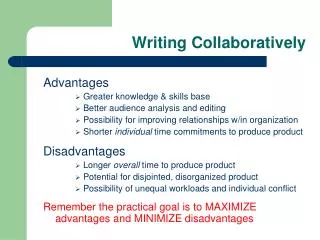
COLLABORATION – What is it? • A process through which parties who see different aspects of a problem can constructively explore their differences and search for solutions that go beyond their own limitations for what is possible. Barbara Gray
COLLABORATION – What is it? • A mutually beneficial relationship between two or more parties who work towards common goals by sharing responsibility, authority and accountability for achieving results David Chrislip and Carl Larson
THE THEORY • Best when the need and intent are to change fundamentally the way services are designed and delivered • Democratic and inclusive • Commitment and involvement of leaders • Interdependent stakeholders • Clear understanding of respective goals of other participants • Common good takes precedence over individual interests
What’s Required? • Shared purpose - Not common interest • Collectively articulated goal / vision • Open and clear communication • Positive political climate (community/networks) • Catalysts
Common Ground • Vulnerable children • Focus on front-line services • NZ Disability strategy • UN Conventions • Value for money • Investment vs cost • Never enough money
What is Required? • Interdependent and participative decision making • Leadership (facilitative not power) • Resources • Commitment • Research • Understanding of end-game (not quick win)
Potential Difficulties • Vested interests – “bumpy transition” • Disparity of power and/or resources • Problems not well- defined • Differing levels of expertise • Technical complexity gets in the way • Hanging on to existing (unsatisfactory) processes • Unilateral efforts produce less that satisfactory solutions
Diversity and Common Purpose • Most groups have a particular focus • Challenges of funding and differing views mean that collaboration can be hard • Policy decisions can cause conflict • Differing accountabilities • Urgency of need for change • Understanding common ground is vital
In New Zealand • Advocacy groups such as DPA, Disability Support Network, Carer’s Alliance • Every Child Counts /Strengthening Families • Cross Party Discussion!! • Waitakere Wellbeing Collaboration Process
Case Study • Back Office collaboration • Premises • Agreement in principle • Shared list of requirements to ensure compatibility • Office Managers met to agree sites and view • CE’s of both organisations supportive
Case Study • Issues arose • Budget differences • Timing • Not clear about other shared services • Key issue open plan vs offices • Didn’t happen!!