Understanding the Characteristics and Reproduction of Viruses
Viruses are unique entities that are not classified in any kingdom of living organisms. They lack organelles, membranes, and cannot reproduce independently, instead relying on living hosts. Composed of DNA or RNA within a protective protein coat called a capsid, they exhibit various shapes like polyhedral and spherical forms. Viruses are classified by their genetic material and the diseases they cause, such as influenza and rabies. Their reproduction occurs through lytic and lysogenic cycles, with the former resulting in cell lysis to release new viral particles.

Understanding the Characteristics and Reproduction of Viruses
E N D
Presentation Transcript
Characteristics of Viruses • are _______ since they have _____________ and are not classified in any kingdom of living things • have no organelles, _______ or __________ and rely upon other living organisms to reproduce
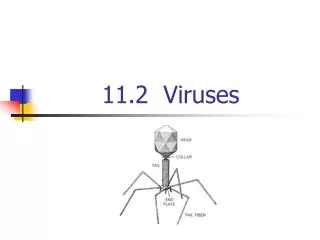
Characteristics of Viruses • consist of DNA or RNA strands contained within a protective protein coat called a _______ • the capsid protects the virus from attack by host cells and is a means by which viruses are classified
Characteristics of Viruses • shapes of capsids: polyhedral, spherical, cylindrical, polyhedral with a protein tail • Exs.
Characteristics of Viruses • Viruses are also classified by the type of ________ they contain, DNA or RNA and by the types of _______ they cause
DNA and RNA Viruses 1) DNA viruses: ____ _____ and follow the lytic cycle • able to be detected and destroyed by the human immune system 2) RNA viruses: most virulent and can remain __________ for a period of days or months or even years • Follow the ____________ but once they are active in a host they can be detected by the immune system • Cause diseases like _______, rabies and ________
Viral Reproduction • There are 2 types of viral reproduction : • 1) Lytic Cycle • 2) Lysogenic Cycle
Lytic Cycle 1) virus attaches to the _______ of the host cell 2) virus injects its nucleic acid into the bacterial cell and takes over the host mRNA 3) the host cell replicates the viral DNA 4) new virus particles are then _______ in the cell and then released through cell ______ 5) the new particles attack neighbouring cells
Lysogenic Cycle 1) the __________ becomes attached to cell wall 2) viral DNA is _______ into the host cell 3) viral DNA inserts itself into the host cell DNA by _________ 4) when the host cell reproduces its genetic content, the ________ are also replicated
Lysogenic Cycle (cont’d) 5) for many generations, there are no active viral particles produced 6) occasionally, the viral DNA will become active in a host cell (_______ which triggers reproduction) 7) bacterium lyses, releasing new viruses 8) phages carry genes from host cell to neighbouring cells
Retroviruses • When an RNA virus enters a host cell it must first convert its ___ to ____ • This is done using a special enzyme called ______________, which the RNA virus carries • It is now able to _____ the viral ___into the host genome and follows the _________ cycle