Molecular Basis of Resistance and Therapeutic Approaches in TNBC Cells
50 likes | 69 Views
This study performed whole transcriptome profiling and a bioactive small molecule screen on TNBC cells with acquired resistance to HSP90i to determine the molecular basis of resistance and potential therapeutic strategies to overcome it.


Molecular Basis of Resistance and Therapeutic Approaches in TNBC Cells
E N D
Presentation Transcript
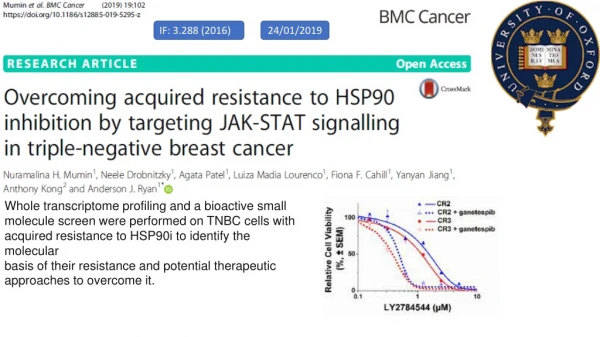
IF: 3.288 (2016) 24/01/2019 Whole transcriptome profiling and a bioactive small molecule screen were performed on TNBC cells with acquired resistance to HSP90i to identify the molecular basis of their resistance and potential therapeutic approaches to overcome it.
IF: 22.844 (2019)5y IF: 27.072 IF: 22.844 (2019)5y IF: 27.072 4 citations 14/05/2018
Razavi et al. identify mutations in the • MAPK pathway and the estrogen • receptor transcriptional program in 22% • of hormone receptor-positive breast • cancers after hormone therapy. These • mutations are mutually exclusive with • ESR1 mutations and correlate with a • shorter response duration to subsequent • hormone therapies. • Prospective sequencing of 1501 HR+ breast cancers in the clinical settin • MAPK and TF alterations were present in 22% of 692 HR+ post-endocrine therapy tumors • MAPK and TF alterations were mutually exclusive with ESR1 mutations • MAPK and TF alterations were associated with shorter response to endocrine therapies Aim: perform a large clinico-genomic analysis to identify additional genomic alterations that might mediate resistance to hormonal therapy and provide a rationale for the development of therapeutic approaches to overcome resistance.
IF: 22.844 (2019)5y IF: 27.072 14/01/2019 1 citations
Ronen et al. show that the cellular plasticity of cancer cells undergoing EMT can be exploited to force transdifferentiation of breast cancer cells into post-mitotic and functional adipocytes, leading to the repression of primary tumor invasion and metastasis formation. • Highlights • EMT-derivedbreastcancercells can differentiateintopostmitoticadipocytes • Adipogenesisdisconnectscancercellsfromaninvasive and oncogenicphenotype • EMT/MET transcriptionfactors and TGF-b signalingregulatecanceradipogenesis • Adipogenesis-inducingdrugcombinationsrepressmetastasis in preclinicalmodels • …that cancer cell plasticity is necessary for cancer dissemination but can be directly targeted and inhibited by a trans-differentiation approach, such as forced adipogenesis