Understanding Grasslands: Ecosystems Dominated by Grasses and Their Unique Climate History
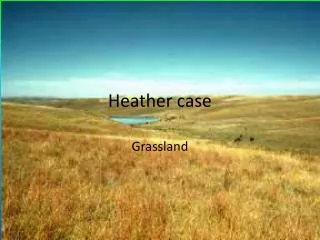
Grasslands are ecosystems primarily made up of grasses and herbaceous plants, thriving in regions with favorable climates. These landscapes emerged prominently during the Miocene and Pliocene Epochs, a time marked by significant geological shifts, including the rise of mountains that altered weather patterns. As a result, grasslands expanded after the Pleistocene Ice Ages, adapting to the hotter and drier conditions. These habitats, found on every continent except Antarctica, vary in vegetation based on climate and geography, showcasing a rich diversity of flora and fauna that depend on these unique ecosystems.

Understanding Grasslands: Ecosystems Dominated by Grasses and Their Unique Climate History
E N D
Presentation Transcript
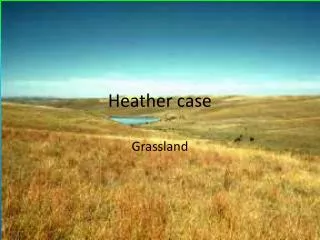
Heather case Grassland
Underlined information Grasslands are characterized as lands dominated by grasses rather than large shrubs or trees. In the Miocene and Pliocene Epochs, which spanned a period of about 25 million years, mountains rose in western North America and created a continental climate favorable to grasslands. Ancient forests declined and grasslands became widespread. Following the Pleistocene Ice Ages, grasslands expanded in range as hotter and drier climates prevailed worldwide. There are two main divisions of grasslands:
Grasslands are areas where the vegetation is dominated by grasses (Poaceae) and other herbaceous (non-woody) plants (forbs). However, sedge (Cyperaceae) and rush (Juncaceae) families can also be found. Grasslands occur naturally on all continents except Antarctica. In temperatelatitudes, such as northwestern Europe and the Great Plains and California in North America, native grasslands are dominated by perennial bunch grass species, whereas in warmer climates annual species form a greater component of the vegetation.[1] Grasslands are found in most ecoregions of the Earth. For example there are five terrestrial ecoregion classifications (subdivisions) of the temperate grasslands, savannas, and shrublandsbiome ('ecosystem'), which is one of eight terrestrial ecozones of the Earth's surface.