Download
1 / 7
0 likes | 8 Views
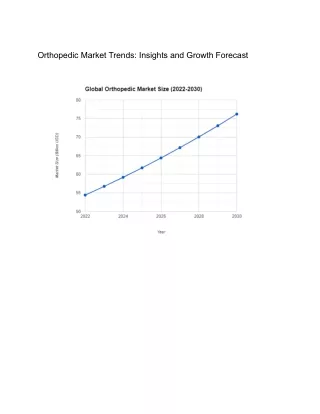
The orthopedic market, an essential part of the healthcare sector, is dedicated to diagnosing, treating, and rehabilitating musculoskeletal disorders. With an aging population, a rise in orthopedic conditions, and significant advancements in medical technology, the market is expected to experience substantial growth. In 2022, the global orthopedic market was valued at approximately $54.4 billion, and it is projected to reach $76.2 billion by 2030, growing at a compound annual growth rate (CAGR) of 4.5%.<br>

E N D
Overview of the Orthopedic Market The orthopedic market, an essential part of the healthcare sector, is dedicated to diagnosing, treating, and rehabilitating musculoskeletal disorders. With an aging population, a rise in orthopedic conditions, and significant advancements in medical technology, the market is expected to experience substantial growth. In 2022, the global orthopedic market was valued at approximately $54.4 billion, and it is projected to reach $76.2 billion by 2030, growing at a compound annual growth rate (CAGR) of 4.5%. Key Trends in the Orthopedic Market Rising Incidence of Orthopedic Disorders Orthopedic conditions such as arthritis, osteoporosis, and sports injuries are becoming more prevalent worldwide. According to the World Health Organization (WHO), around 1 in 6 people will be affected by arthritis at some point in their lives, driving the demand for orthopedic treatments. Advancements in Surgical Techniques The market is increasingly moving towards minimally invasive surgical techniques, which result in less tissue damage, quicker recovery times, and better patient outcomes.
Technologies such as arthroscopy and robotic-assisted surgery are becoming more popular, leading to higher adoption rates. Growth of Orthopedic Implants The demand for orthopedic implants is expected to surge, particularly for joint replacement surgeries. By 2030, the global joint replacement market is projected to reach $23.4 billion, driven by an aging population and rising obesity rates, which contribute to joint-related issues. Technological Innovations Innovations in materials and technology are transforming the orthopedic market. The development of smart implants, 3D printing, and biocompatible materials is enhancing the effectiveness and longevity of orthopedic devices. Customized implants created through 3D printing are particularly noteworthy. Focus on Rehabilitation and Physical Therapy There is a growing emphasis on incorporating rehabilitation and physical therapy into orthopedic care. Patients are increasingly seeking comprehensive treatment plans that include these services to enhance recovery and improve mobility post-surgery. Orthopedic Market Growth Drivers Aging Population The global aging population significantly drives the orthopedic market's growth. As people age, they become more susceptible to musculoskeletal disorders, increasing the demand for orthopedic treatments. Rising Obesity Rates The prevalence of obesity is contributing to a higher incidence of orthopedic conditions, particularly joint-related issues. The WHO reports that global obesity rates have nearly tripled since 1975, leading to increased demand for orthopedic services. Technological Advancements Innovations in orthopedic devices and surgical techniques are key growth drivers. Advanced materials, robotic-assisted surgery, and minimally invasive procedures are improving patient outcomes and increasing the adoption of orthopedic treatments.
Increased Healthcare Expenditure Rising healthcare expenditure, especially in emerging markets, is facilitating access to orthopedic care. Investments in healthcare infrastructure by governments and private sectors are improving the availability of orthopedic services. Orthopedic Market Size and Forecast The orthopedic market is expected to grow significantly over the next few years: ● Market Size: Valued at $54.4 billion in 2022, it is projected to reach $76.2 billion by 2030. ● CAGR: Anticipated growth at a CAGR of 4.5% during the forecast period. ● Regional Insights: North America approximately 38%. The Asia-Pacific region is expected to witness the highest growth rate, driven by increased healthcare investments and rising awareness of orthopedic conditions. holds the largest market share at Orthopedic Market Segmentation By Product Type ● Orthopedic Implants: Including joint implants, spinal implants, and trauma implants. Joint implants are expected to dominate due to the high demand for knee and hip replacement surgeries. ● Orthopedic Devices: Comprising braces, supports, and other rehabilitation and support devices. ● Surgical Instruments: Tools and equipment used in orthopedic surgeries, such as drills, saws, and retractors. By Procedure Type ● Joint Replacement: Including knee, hip, and shoulder replacement surgeries. This segment is expected to grow significantly due to the rising incidence of osteoarthritis and other joint-related disorders. ● Spinal Surgery: Including spinal fusion and disc replacement procedures. This segment is driven by the increasing prevalence of spinal disorders. ● Trauma Surgery: Encompassing surgeries related to fractures and injuries, driven by the rising incidence of accidents and sports injuries. By End-User
● Hospitals: The primary end-users, accounting for the largest market share due to the high number of orthopedic surgeries performed. ● Ambulatory Surgical Centers (ASCs): Gaining popularity for orthopedic procedures due to cost-effectiveness and shorter recovery times. ● Rehabilitation Centers: Crucial for post-operative care and recovery. By Geography ● North America: Dominates the market due to high healthcare expenditure and advanced healthcare infrastructure. ● Europe: Holds a significant market share with a focus on innovative orthopedic solutions. ● Asia-Pacific: Expected to witness the highest growth rate due to increasing healthcare investments and a growing aging population. Key Players in the Orthopedic Market Johnson & Johnson A global leader in medical devices and orthopedic products, offering a wide range of implants and surgical instruments under its DePuy Synthes brand. The company focuses on innovation and research. Stryker Corporation Known for its innovative products and solutions for joint replacement and trauma surgery, Stryker invests heavily in research and development. Medtronic A leading medical technology company offering various orthopedic products, including spinal implants and surgical instruments. The company focuses on improving patient outcomes through innovative technologies. Zimmer Biomet Specializes in orthopedic implants and surgical solutions, particularly in the joint replacement segment, with a strong commitment to quality and innovation. Smith & Nephew
A global medical technology company offering a range of orthopedic products, including joint reconstruction and trauma solutions, emphasizing advanced technology and patient-centered care. Challenges in the Orthopedic Market Regulatory Compliance The orthopedic industry is subject to stringent regulations regarding product safety and efficacy, which can be time-consuming and costly to navigate. Intense Competition The highly competitive market requires continuous innovation and differentiation to maintain a competitive edge. Economic Factors Economic fluctuations and changes in healthcare policies can impact the market. Companies must adapt to changing reimbursement models and regulations. Future Outlook for the Orthopedic Market Technological Innovations Advancements in orthopedic technology, such as robotic-assisted surgery and smart implants, will drive market growth. Companies investing in innovative solutions will likely capture a larger market share. Focus on Patient-Centric Care The trend towards patient-centered care is expected to grow, emphasizing improving patient outcomes and satisfaction. Companies prioritizing patient engagement and education will gain a competitive advantage. Expansion into Emerging Markets With improving healthcare infrastructure and rising disposable incomes in emerging markets, orthopedic manufacturers have significant opportunities for expansion. Sustainability Initiatives
Increasing demand for sustainable and eco-friendly orthopedic products will drive companies to adopt sustainable practices and materials. Conclusion The global orthopedic market is set for significant growth, driven by the rising incidence of orthopedic disorders, advancements in surgical techniques, and increasing demand for orthopedic implants. With a projected market size of $76.2 billion by 2030, the market offers numerous opportunities for manufacturers, healthcare providers, and investors. Key players are focusing on sustainability to thrive in this dynamic environment. As the industry continues to evolve, trends such as technological advancements and the demand for personalized solutions will further shape the future of the orthopedic market, enhancing the overall patient experience. innovation, patient-centric care, and