Understanding the Human Respiratory and Excretory Systems
This chapter explores the essential functions and structures of the human respiratory and excretory systems. The respiratory system facilitates gas exchange, bringing in oxygen while removing carbon dioxide. Key components, including the nasal chamber, trachea, bronchi, lungs, and alveoli, work together to ensure efficient breathing. The excretory system, on the other hand, eliminates liquid wastes through organs like the kidneys, ureters, and bladder. Understanding these systems is vital for grasping how the body maintains homeostasis and health.

Understanding the Human Respiratory and Excretory Systems
E N D
Presentation Transcript
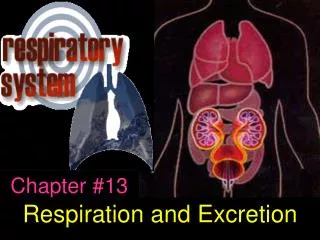
Chapter #13 Respiration and Excretion
Chapter 13.1 Notes • Respiratory system is made of body parts that help with the exchange of gases. Brings in oxygen and removes carbon dioxide. • Cellular respiration is a chemical reaction that happens inside cells. • C6H12O6 + O2 CO2 + H2O • Sugar + oxygen makes carbon dioxide + water
Chapter 13.2 Notes Respiratory Organs • Nose- has hair that trap dust • Nasal Chamber- forms mucus to keep air moist • Trachea-Windpipe • Epiglottis- small flap that covers trachea when you swallow. • Bronchi- 2 short tubes that carry air from trachea to the lungs. • Lungs- 2 soft organs that exchange gases. • Alveoli- are tiny air sacs. Look like grapes (300 million).
Diaphragm sheet like muscle that separates the inside of your chest from your intestines and other organs. Breathing out- ribs in and down. Diaphragm relaxed (up). Lungs squeezed. Breathing in- ribs up and out. Diaphragm contracted (down). Lungs expand.
Chapter 13.3 Notes • Carbon Monoxide (CO) is an odorless, colorless gas sometimes found in the air. It is more easily picked up by your red blood cells than oxygen. • Pneumonia is a lung disease caused by bacteria or virus. Causes lung tissue to form extra mucus. Communicable or contagious.
Emphysema is a lung disease that results in the breakdown of alveoli. People with emphysema seems out of breath. Caused by smoking and air pollution. Not communicable.
Chapter 13.4 Notes • Excretory system- is made up of organs that rid the body of liquid wastes. • Urea- is a waste that results from the breakdown of body protein. • Urine waste liquid that reaches the ureter about 1 liter per day. • Nephron- is a tiny filter unit of the kidney.
Kidneys- filter blood 200 liters per day • Ureter is a tube that carries wastes from a kidney to the urinary bladder. • Urinary bladder- is a sac that stores liquid wastes removed from the kidneys.
Skin 3 Jobs • Protect the body from infection • Sense organ • Excretion of salt and water
Work Cited • “Respiratory system”. February 25, 2007. http://www.east-haven.k12.ct.us/eha/system/system/systemangelicat/systemangelicat%5C.htm • “Excretory system”. February 25, 2007. http://www.tqnyc.org/NYC063547/images/try_excretory_3_good_use.jpg • “Human respiratory system”. February 25, 2007. http://www.east-haven.k12.ct.us/eha/system/system/systemangelicat/respiratorydetail.gif • “Breathing”. February 25, 2007. http://www.geocities.com/flutepower55/breathing.gif • “Emphysema”. February 26, 2007. http://static.howstuffworks.com/gif/emphysema-ga-1.jpg • “Urinary system”. February 26, 2007. http://www.nurse-prescriber.co.uk/education/visual_lib/pp000urin.jpg • “Nephron”. February 26, 2007. http://static.howstuffworks.com/gif/kidney-nephron.jpg • “Skin”. February 26, 2007. http://kidshealth.org/kid/body/images_45364/skin325.gif