Download
1 / 4
40 likes | 165 Views
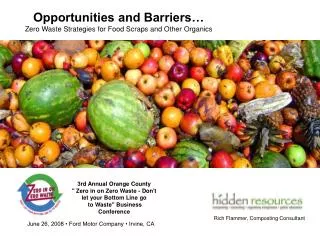
Discover the advantages of integrating food scraps into your yard waste collection program. By utilizing composting, communities can significantly extend landfill life, reduce greenhouse gas emissions, and improve soil quality. Food scraps constitute up to 15% of municipal solid waste, making their diversion crucial for reaching waste reduction goals. Learn cost-effective strategies for commingling food scraps with yard waste, encourage residential participation, and implement a successful program with educational outreach, monitoring, and resources to ease the collection process.

E N D
Why Compost Food Scraps? • Increases life of landfill • Food scraps can make up as much as 15% of community’s MSW. • Reduces landfill greenhouse gases • Food scraps a key ingredient in methane generation. • Improves the physical, chemical, and biological properties of soil1. • Help communities reach their waste diversion goals. 1: Keeping Organics out of Landfill USCC
Why Comingle Food Scraps with Yard Waste? • Cost effective strategy to increase waste diversion • No need for additional trucks and carts. • Compost processing fees are often lower than MSW tipping fees. • Improve likelihood of residential participation and acceptance • Residents already in habit of collecting yard waste, so adding food scraps is easier. 1: Keeping Organics out of Landfill USCC
How to Implement a Successful Commingled Food-Yard Waste Program • Learn capabilities of hauler(s) and compost processor(s) to develop food content and collection plan. • Design strategy to encourage residential participation • Educational Material: Clear, concise, and frequent • Outline what can be composted. • Address the “yuck” factor • Pay as You Throw Trash • Change trash collection to bi-weekly • Develop marketing plan for communicating educational material. • Communication/meetings with politicians, businesses, and residents prior to program launch. • Create plan for monitoring/measuring results • Consider providing kitchen container and compostable bags to minimize “yuck” factor.