Download

1 / 13
130 likes | 324 Views
Igneous rocks are formed from the solidification of molten material, such as magma below Earth's surface or lava at the surface. They are classified into two main groups: intrusive (plutonic) rocks, which cool slowly and have coarse-grained textures with visible crystals, and extrusive (volcanic) rocks, which cool quickly, leading to fine-grained textures often lacking visible crystals. These rocks can exhibit porphyritic textures, where different cooling rates create visible and non-visible crystals. Their mineral composition and silica content further categorize them as mafic, ultramafic, felsic, or intermediate.

E N D
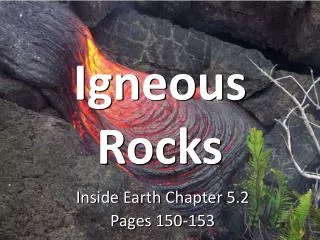
Igneous rocks form from the solidification or crystallization of minerals in molten material. • If the rock form below the Earth’s surface it is considered magma • Molten rock that hardens on the Earth’s surface is called lava
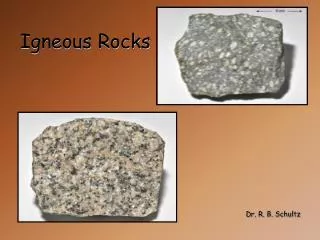
Igneous rocks form from the cooling of molten materials • They are composed of interlocking and randomly oriented crystals • These crystals may be clearly visible to the naked eye (e.g. granite) • Or require a microscope for viewing (e.g. rhyolite)
Two properties used to classify igneous rock • Texture (crystal size) • Mineral composition Classification of Igneous Rock
Generally Igneous rocks fall into two main groups • Intrusive – form from the crystallization of magma, as it occurs below the surface. • Also known as plutonic (Pluto – Greek god of the underworld) • Being below the surface the minerals it cools slowly, which gives the crystals time to grow • Intrusive rocks are coarse-grained or phaneritic texture. Crystals are visible to the naked eye. Two Main Groups
Extrusive - igneous rocks formed from lava at the earth’s surface • These rocks are referred to a volcanic. • Lava tends to cool quickly since it is exposed to atmospheric temperatures. Crystals have a short or no time to grow. • Extrusive rocks are fine-grained or aphanitic. The mineral crystals are not visible to the naked eye.
This is a rock which shows both visible and no-visible crystals. • This indicates that the rock cooled at two different rates. • These rocks are known as porphyritic Porphyritic material
Some extrusive igneous rock cool so quickly that they develop a glassy texture with no visible crystals. • A good example of this is obsidian. Glassy texture
Where there is a release of gases in the rock during the cooling of the lava a frothy texture appears. • Pumice is a fine example of this feature. Frothy texture
This picture to the right Depict the various textures present in igneous rocks as a function of the cooling rate. Porphyritic Textures
In terms of mineral composition, magmas are characterized by the amount of silica (SiO2) present in the rock • There are four categories into which igneous rocks fall into based on the percentage of silica in the rock. • Mafic 45-52% • Ultramafic less than 45% • Felsic greater than 65% • Intermediate 53-65% Mineral Composition
The naming of an igneous rock takes into consideration the rock’s texture and mineralogy as shown in the table below. Naming of Igneous Rocks