Voting System Planning and Testing
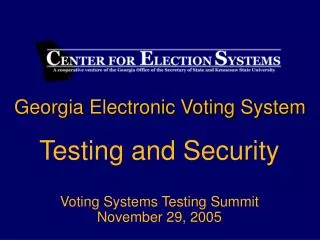
This document details key discussions from the 2005 Voting Systems Testing Summit led by R. Michael Alvarez at Caltech/MIT. It emphasizes the importance of an end-to-end process in voting system testing, covering areas such as registration, balloting, and tabulation. Key topics include the critical assessment of physical facilities, software, and procedural controls, as well as the necessity for contingency planning and collaborative emergency strategies. The need for developing robust testing protocols, security plans, and best practices for voting systems is highlighted, aiming to ensure transparency and integrity in electoral processes.

Voting System Planning and Testing
E N D
Presentation Transcript
Voting System Planning and Testing R. Michael Alvarez Caltech/MIT VTP Voting Systems Testing Summit 2005
Voting systems • The entire process, end-to-end (registration, balloting, tabulation ..) • Yes, precinct-voting devices are critical, but so are VR, absentee/early voting, tabulation • Planning and testing should involve the entire process, especially potential points of failure • One important concern now are statewide voter registration systems. Alvarez, Voting System Testing Summit 2005
Security Planning • End-to-end security review, threat assessment • Protect physical facility, use procedural controls (chain of custody) • Software and hardware protection • Many eyes involved in each step • Openness and transparency Alvarez, Voting System Testing Summit 2005
Example: L&A, Travis County Alvarez, Voting System Testing Summit 2005
Contingency Planning • Assume bad things will happen! Moynihan (2005), “Leveraging Collaborative Networks in Infrequent Emergency Situations”: • Pre-plan, but expect to plan more once emergency occurs • Identify necessary resources and match them with organizational competence • Create trust where you can, find alternatives when you can’t • Take advantage of technology to improve coordination and efficacy • Establish, formalize and communicate basic procedures Alvarez, Voting System Testing Summit 2005
Testing • In the US, we generally procure first, experiment later. Testing often only around procurement. • We need to develop protocols for testing practices: • Pilot test voting systems, starting small, building to real experiments; using experimental methods, with treatment and control groups (and use real people!) • Field test usability, ballot designs, accessibility • Auditing, monitoring, data analysis from field • Security testing, including “tiger team” and parallel monitoring programs • Think of testing as a continuing and on-going process (before, during and after procurement) • Disseminate testing results, feedback into certification Alvarez, Voting System Testing Summit 2005
Example: Buenos Aires Alvarez, Voting System Testing Summit 2005
Conclusions and Questions • Need to develop security plans • Need to develop contingency plans • Need testing protocols for voting systems • Standards or guidelines for plans and testing protocols? • Best practices? • Who should help develop plans and protocols (EAC, NIST, NAS, State/local officials)? • Resources? Alvarez, Voting System Testing Summit 2005