Download
1 / 5
50 likes | 160 Views
This overview delves into the powers of the Federal Reserve over interest rates and reserve amounts, as well as the government’s influence on taxes and spending through fiscal policy. It outlines contractionary policies aimed at combating inflation, such as increasing interest rates and taxes, and decreasing government spending. Conversely, it explains expansionary policies designed to stimulate the economy during recessions, including lowering interest rates and taxes, and increasing government spending. Additionally, it distinguishes between progressive and regressive taxes, and discusses excise taxes on specific goods.

E N D
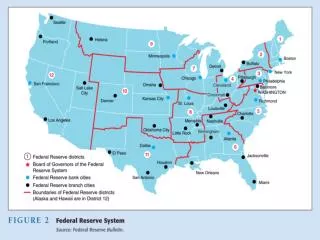
Monetary Policy- • The Fed’s power over interest rates and amount of $ in reserve • Fiscal Policy- • The Government power over taxes and spending
Contractionary Policy (Tight $$) – during inflation • 1. Increase interest rates • 2. Increase reserve requirement ($$ banks must have in reserve) • 3. Increase taxes • 4. Decrease government spending
Expansionary Policy (Easy or Loose $$) – during recession/depression • 1. decrease interest rate (easy to buy) • 2. decrease taxes • 3. decrease reserve requirements (banks have more $$ to loan) • 4. increase government spending
Progressive Tax- • The higher one’s income the higher the percentage of tax (ex. Income tax) • Regressive Tax- • Tax imposed at a flat rate (ex. Sales tax) • Excise – tax on manufacture, sale, and consumption of goods; often called “hidden tax” (ex. Tax on fuel, alcohol, tobacco