Understanding Collagen: The Essential Protein for Skin, Bones, and More
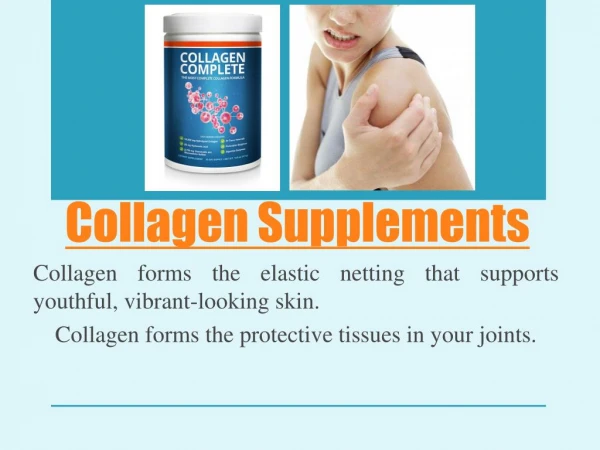
Collagen is a vital protein found in mammals and humans, constituting about 25% of our body’s protein content. Often referred to as the body’s "glue," collagen supports skin, teeth, cartilage, bones, tendons, and muscles, helping to maintain structural integrity. It is a fibrous protein that forms strong fibers, making it incredibly tough. Understanding its composition, significance, and aging effects—such as wrinkles—can enhance our awareness of physical health and beauty as we age.

Understanding Collagen: The Essential Protein for Skin, Bones, and More
E N D
Presentation Transcript
Collagen By: YuraniFarfan
What is Collagen? Collagen is a type of protein can be found in mammals and humans. Collagen basically supports skin, teeth, cartilage, bones, tendons and muscle. Collagen makes up 25% of our proteins in our body. Collagen is basically like a glue that holds our body/parts together. If we didn’t have Collagen then our bodies would fall apart.
What Other Organisms use this Protein? Collagen can be found in Humans, and Animals.
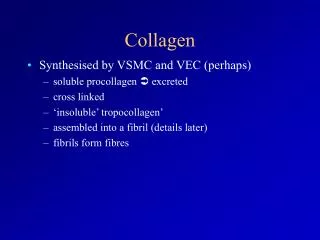
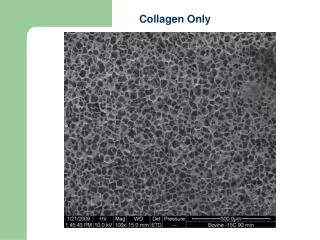
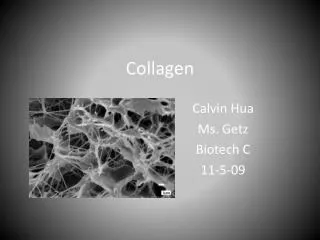
Structure Of Collagen Collagen is a fibrous protein molecule . These fibers intertwine with each other just like a rope. They are very tough and can resist a pulling force. Collagen contains large amounts of glycine and proline, as well as two amino acids that are not inserted directly by ribosomes.
Amino Acid Sequence Amino Acid in a Calf leg of Human pGlu-Leu-Ser-Tyr-Gly-Tyr-Asp-Glu-Lys-Ser-Thr-Gly-Ile-Ser-Val-Pro- 1 Gly-Pro-Met-Gly-Pro-Ser-Gly-Pro-Arg-Gly-Leu-Hyp-Gly-Pro-Hyp-Gly-Ala-Hyp-Gly-Pro-Gln- 22 Gly-Phe-Gln-Gly-Pro-Hyp-Gly-Gly-Glu-Hyp-Gly-Glu-Hyp-Gly-Ala-Ser-Gly-Pro-Met-Gly-Pro-Arg- 43 Gly-Pro-Hyp-Gly-Pro-Hyp-Gly-Lys-Asn-Gly-Asp-Asp-Gly-Glu-Ala-Gl~-Lys-Pro-Gly-Arg-Hyp- 64 Gly-Glu-Arg-Gly-Pro-Hyp-Gly-Pro-Gln-Gly-Ala-Arq-Gly-Leu-Hyp-Gly-Thr-Ala-Gly-Leu-Hyp- 85 Gly-Met-Hyl-Gly-His-Arg-Gly-Phe-Ser-Gly-Leu-Asp-Gly-Ala-Lys-Gly-Asp-Aia-Giy-Pro-Aia- 106 Gly-Pro-Lys-Gly-Glu-Hyp-Gly-Ser-Hyp-Gly-Glu-Asn-Gly-Ala-Hyp-Gly-Gln-Met
Why I chose this Protein? I chose this Protein because I never knew played a big part of our life. For instance growing up and getting older. Collagen ages when we get older. It develops wrinkles in our skin that makes us look older.
Bilography! Harrison, Karl. "Collage, What is Collagen? About its science, Chenistry and Structure." Collagen . N.p., July 2005. Web. 14 Oct. 2009. <http://www.3dchem.com/molecules.asp?ID=195http://>. J, Eur. "Wiley Interscience." http://www3.interscience.wiley.com/cgi-bin/ fulltext/120758312/PDFSTART. N.p., n.d. Web. 14 Oct. 2009. <http://http://www3.interscience.wiley.com/cgi-bin/fulltext/120758312/ PDFSTART http://www.dermaxime.com/collagen.htm#What is collagen? http://intro.chem.okstate.edu/1515SP01/Lecture/Chapter12/Lectur3.gif http://media.rd.com/rd/images/rdc/mag0803/teen-sex-01-af.jpg http://www.3dchem.com/molecules.asp?ID=195