Advances in Colloidal Intercalation of Layered Inorganic Materials at Oregon State University
This document explores innovative methods for synthesizing colloidal dispersions of layered inorganic materials, focusing on intercalation techniques using smectite clays, layered double hydroxides, and metal dichalcogenides. The research highlights the ability to prepare these materials under various charge densities and solvent environments, including graphite exfoliation. Key outcomes include improved surface charge density and insights into the electrochemical performance of Li-ion batteries, enhancing our understanding of rechargeability and stability of intercalated compounds.

Advances in Colloidal Intercalation of Layered Inorganic Materials at Oregon State University
E N D
Presentation Transcript
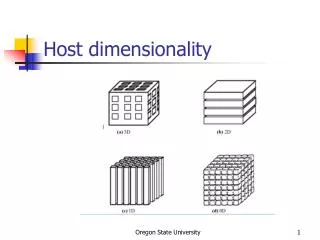
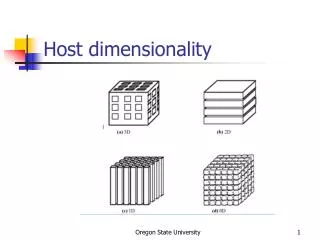
Host dimensionality Oregon State University
Intercalate type http://www.cem.msu.edu/~pinnweb/research-na.htm Oregon State University
Single-sheet inorganic colloidal dispersions are common and easily prepared • Ion exchange: (fixed charge density) • smectite clays Nax+yAl2-yMgySi4-xAlxO10(OH)2 • layered double hydroxides Mg3Al(OH)8Cl • layered oxidesCsxTi2-x/4x/4O4 • metal phosphorous sulfides K0.4Mn0.80.2PS3 • Redox reaction: (variable charge density) • metal dichalocogenides LixMoS2 • layered oxides LixCoO2 , NaxMoO3
Intercalation/exfoliation Layered chalcogenide exfoliation Graphite exfoliation Can we make colloidal [graphenium]+or [graphide]- sheets
Intercalation compound Swollen Colloidal No solvation solvent in galleries solvated ions/sheets DHL > DHsolv DHsolv > DHL higher surface charge density lower surface charge density …if you have the correct sheet charge density and an appropriate polar solvent
Graphite structure • C-C in-plane = 1.42 Å • Usually (AB)n hexgonal stacking • Interlayer distance = 3.354 Å Graphite is a semi-metal, chemically stable, light, strong A B http://www.ccs.uky.edu/~ernst/ A
Li ion battery chemistry Cathode LiCoO2 Li1-xCoO2 + xLi+ + xe- Anode 6C + Li+ + e- C6Li Electrolyte Organic solvent with LiPF6
Selected rechargeable batteries C. Pillot, BATTERIES 2009, Cannes, 2009
Graphite Lithiation Expands about 10% along z Graphite lithiation: approx 0.2-0.3 V vs Li+/Li Theoretical capacity: Li metal > 1000 mAh/g C6Li 370 Actual C6Li formation: 320 – 340 mAh/greversible; 20 – 40 irreversible
Li arrangement in C6Li Li+ occupies hexagon centers of non-adjacent hexagons Theoretical capacity: Li metal > 1000 mAh/g C6Li 370 Typical C6Li formation: 320 – 340 reversible; 20 – 40 irreversible
Telsa battery pack http://www.teslamotors.com Next decade projections
GIC’s • ReductionM+Cx- • Group 1 except Na • Oxidation Cx+An- • F, Br3-, O (OH) • BF4-, P BiF6- , GeF62- to PbF62-, MoF6-, NiF62-, TaF6-, Re PtF6- • SO4-, NO3-, ClO4-, IO3-, VO43-, CrO42- • AlCl4-, GaCl4-,FeCl4-, ZrCl6-,TaCl6- Oregon State University
Staging and dimensions Ic = di + (n - 1) (3.354 Å) For fluoro, oxometallates di≈ 8 A, for chlorometallates di≈ 9-10 A Oregon State University
Graphite oxidation potentials H2O oxidation potential vs Hammett acidity Colored regions show the electrochemical potential for GIC stages. 49% hydrofluoric acid All GICs are unstable in ambient atmosphere , they oxidize H2O Oregon State University
1,2 Cx + K2MnF6 + LiN(SO2CF3)2 CxN(SO2CF3)2 + K2LiMnF6 oxidant anion source GIC O CF3 S N O O F3C S .. O New syntheses: chemical method 1. 48% hydrofluoric acid, ambient conditions 2. hexane, air dry Oxidant and anion source are separate and changeable. Surprising stability in 50% aqueous acid.
CxN(SO2CF3)2 chem prepn Oregon State University
F F F F New syntheses: N(SO2CF3)2 orientation
Increasing F anion co-intercalate with reaction time CxN(SO2CF3)2·dF Katinonkul, Lerner Carbon (2007)
New syntheses: imide intercalates Anion mw di / nm 1. N(SO2CF3)2 280 0.81 2. N(SO2C2F5)2380 0.82 3. N(SO2CF3)(SO2C4F9) 430 0.83 1 3 2
CxN(SO2CF3)2 echem prepn 2 1 3 2 Oregon State University
CxN(SO2CF3)2 - echem prepn CxPFOS CxN(SO2CF3)2 Oregon State University
Imide (NR2-) intercalates Anion MW di / Å N(SO2CF3)2 280 8.1 N(SO2C2F5)2380 8.2 N(SO2CF3) 430 8.3 (SO2C4F9) Oregon State University
CxPFOS - preparation Cx+ K2Mn(IV)F6 + KSO3C8F17 CxSO3C8F17 + K3Mn(III)F6 (CxPFOS) Solvent = aqueous HF 3.35 A Oregon State University
CxPFOS intercalate structure Anions self-assemble as bilayers within graphite galleries Oregon State University
New syntheses: CxSO3C8F17 Domains are 10-20 sheets along stacking direction
CxB(O2C2(CF3)4)2 Stage 1 1.13 0.85 nm 1.12 0.78 nm T Unexpected anion orientation - long axis to sheets Borate chelate GIC’s Blue: obs Pink: calc CxB(O2C2O(CF3)2)2 Stage 2