Section Control on Austrian motorways
This document explores the implementation and impact of section control systems on Austrian motorways, focusing on stationary and mobile systems. It outlines objectives such as monitoring speed limits, enhancing traffic flow, and ensuring safety through the detection of violations and stolen vehicles. A case study from the Kaisermühlen tunnel demonstrates improvements in safety and reductions in accident numbers since the system's introduction, highlighting cost-benefit analyses and environmental impacts linked to reduced emissions. The findings showcase the overall efficacy of the control systems.

Section Control on Austrian motorways
E N D
Presentation Transcript
Section Control on Austrian motorways by Christian Stefan
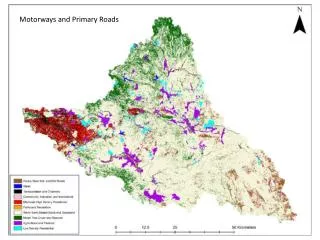
Section Control on Austrian motorwaysSites of Section Control Stationary system/existing Mobile section control/existing Kaisermühlen tunnel Mobile section control/planned Haid-Sattledt Wechsel Gmünd-Spital Spital-Paternion
Section Control on Austrian motorwaysSites of Section Control » ASFINAG: bid invitations for another 6 Section Control systems in 2006
Flash Camera Laser detector Section Control on Austrian motorwaysSystem description
Section Control on Austrian motorwaysObjectives » Monitoring different speed limits » Harmonization of traffic flow » Surveillance of closed lanes » Detection of wrong-way drives (’ghost cars‘) » Image triggering for vehicles exceeding height limits » Detection of stolen vehicles » Traffic surveillance » Statistical data
UN-Headquarters Danube Section Control on Austrian motorwaysCase study Kaisermühlen tunnel
Section Control on Austrian motorwaysCase study Kaisermühlen tunnel
Section Control on Austrian motorwaysAverage speed: Before/After
Section Control on Austrian motorwaysCosts/Benefits Costs of the measure » Investment costs » Annual costs of operation and maintenance Economic benefits » Reduction of accident costs (numbers, severity of injury) » Reduction of road traffic emissions
Section Control on Austrian motorwaysAccident history » Reduction in total numbers of casualty accidents and severity of injury » since August2002: no fatal accident recorded
Section Control on Austrian motorwaysSafety effects » Comparison ’Current situation’ vs. ’Anticipated situation without SC’ » Control group: development of accidents on motorways
Section Control on Austrian motorwaysValuation of environmental impacts » Emission model by the Austrian Umweltbundesamt » Input factors: vehicle type (passenger cars, lorries) speed during day/night changes in composition of vehicle fleet
Section Control on Austrian motorwaysSpeed violations and charges »Aug.03 – Sept.04: more than 29 million vehicles measured » 40.881 drivers charged because of speeding Every 700th driver (0,14%) does not follow speed regulations (?) »mutual recognition of financial penalties only with D, CH
Section Control on Austrian motorwaysCost-Benefit Ratio (CBR) ROSEBUD (WP1): CBR > 3 are ranked „excellent“
Section Control on Austrian motorwaysConclusions » Positive safety effect despite low accident rates Accident rate in the Kaisermühlen Tunnel: 0.10 Austrian average on motorways: 0.12 » Stronger effects on road sections with above-average accident rates » CBR would be higher if material damage accidents and foreign speeders were included » CBA incorporates various effects (not only safety effects) into evaluation process » Results from this CBA can not be generalised but refer to a specific situation (Kaisermühlen Tunnel).
Section Control on Austrian motorways Thanks for your attention