Conserving the Amazon: WWF's Initiative for a Sustainable Future
The Amazon Network Initiative aims to preserve the Amazon biome, vital for climate regulation and biodiversity. Covering 6.7 million square kilometers and supporting over 33 million people, the Amazon is crucial in mitigating climate change, housing 40% of Earth's tropical forests and 10% of known species. Through strategic actions, WWF promotes the integration of ecosystem services into development, bolsters the value of natural ecosystems, and supports sustainable land planning practices. Our vision is an ecologically healthy Amazon that sustains cultural contributions while ensuring social equity and global responsibility.

Conserving the Amazon: WWF's Initiative for a Sustainable Future
E N D
Presentation Transcript
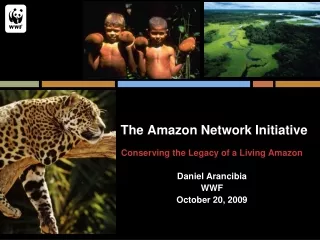
The Amazon Network Initiative Conserving the Legacy of a Living Amazon Daniel Arancibia WWF October 20, 2009
Amazon: Geographic Scope • 6.7 million square kilometers in size • Shared by 8 countries & 1 overseas territory • > 33 million people living in the Amazon
The Amazon Biome: Importance • >90-140 billion tons of carbon – significant for climate change mitigation • 40% of the Earth’s remaining Tropical Forests • 20% of world’s freshwater flows through the Basin • > 10% of the known species on Earth found here • 350 indigenous groups dependent on its resources; > 60 still living in voluntary isolation
WWF in the Amazon • > 40 years of experience in the region • Presence in 8 out of 9 countries • Work with partners across scales – local to global • Thematic expertise on footprint & biodiversity issues
Climate Change • Amazon: a regional and global climate regulator • Links between deforestation and climate change • Potential tipping points
Extensive Cattle Ranching • 80% of deforestation in the Amazon Biome brought about by cattle ranching • Low productivity cattle ranching pervasive
Mechanized agriculture • Amazon increasingly integrated into national and global demand • Booming demand for animal feed and biofuels • Soy • Sugar cane • Palm oil
Drivers of change in the Amazon • Market demand for agro-commodities and energy • Transport infrastructure • Amazon as critical provider of ecosystem goods & services not factored into development paradigm • Comparatively low economic value of natural ecosystems • Opportunistic land use
Amazon Network Initiative: Vision We envisionan ecologically healthy Amazon Biome that maintains its environmental and cultural contribution to local peoples, the countries of the region, and the world, within a framework of social equity, inclusive economic development and global responsibility
Amazon Conceptual Model Main Strategies Main drivers Main Threats Mainpressures Conservation Targets
ANI Strategies • Shifting the Paradigm • Bolstering the Value of Natural Ecosystems • Sound Land Planning and Conservation • Sustainable Agro-Commodities • Free-flowing Rivers and Forest-friendly Roads
ANI Strategy 1: Shifting the Paradigm • Amazon ecosystem services incorporated as critical ingredient of development • Amazon’s regional & global contribution understood as vital • Responsibility fostered at all levels By: • Showing policy / economic benefits of healthy Amazon • Building committed & informed constituencies for the Amazon
ANI Strategy 2: Bolstering the Value of Natural Ecosystems • Increased market value of natural ecosystems by: • Promoting Carbon Credits • Payment for Environmental Services (other than carbon) • Advocating for comprehensive forest policies • Promoting demand for sustainable forest products
ANI Strategy 3: Land Planning & Conservation • Secure the foundations of a healthy ecosystem through a landscape approach by supporting: • Land-use plans in priority landscapes • Strengthening of land tenure and resource rights • Creation of Protected Areas • Effective management of critical protected areas, indigenous lands & key areas without legal protection
ANI Strategy 4: Sustainable Agro-Commodities • Influence markets to signal need for improved performance through : • Adoption of socio-environmental standards & better management practices • Designation of “go” vs. “no-go” zones
ANI Strategy 5: Forest Friendly Roads & Free-Flowing Rivers • Infrastructure development recognizes importance of ecosystem and local residents’ needs by: • Improving social & environmental criteria • Influencing national and regional transportation and energy policies • Enhancing civil society capacity & participation during infrastructure design & implementation
ANI Multi-Scale Approach Source: Folke et al.(1998)