
Nutritional Shifts in Tanzanian Diets: Macronutrient Variations Across Socioeconomic Classes
This study explores the macronutrient composition of Tanzanian diets as influenced by socioeconomic status. Lower and middle-class diets comprise 15% fat, 15% protein, and 70% carbohydrates, while upper-class diets feature 43% fat, 17% protein, and 40% carbohydrates. These dietary changes contribute to rising obesity rates and hypertension among adults aged 15 and above, as highlighted by data from the Tanzanian Ministry of Health. Understanding these shifts is crucial for developing targeted health policies to combat rising morbidity and mortality in Tanzania.

Nutritional Shifts in Tanzanian Diets: Macronutrient Variations Across Socioeconomic Classes
E N D
Presentation Transcript
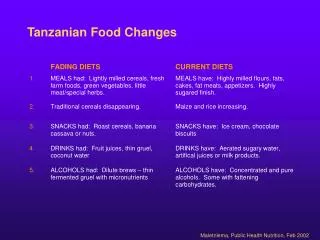
Macronutrient Changes Diets Composition: Diets for low and middle class: Fat 15%, Protein 15%, Carbohydrates 70% Diets for upper class: Fat 43%, Proteins 17%, Carbohydrates 40%
Figure 1: Prevalence of Hypertension in VariousAdult Tanzanian Populations 15 Years and Above Source:Ministry of Health (1997) Policy Implications of Adult Morbidity and Mortality. MOH, Dar es Salaam, Tanzania.
Morbidity Source: Cole 1959. E.A. Med. J. 10: 538 - 41.
Mortality Source: Cole 1959. E.A. Med. J. 10: 538 - 41.