Download

1 / 6
70 likes | 243 Views
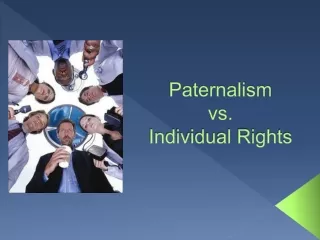
Parentalism, often referred to as paternalism, involves protecting individuals from self-harm by restricting their choices against their consent. This principle suggests that certain individuals, like parents, politicians, or medical professionals, may assume a privileged role to determine what is best for others. There are two forms: strong parentalism, which limits the autonomy of functionally autonomous individuals, and weak parentalism, applied to those with severely diminished autonomy. Key questions include the impact on self-actualization and autonomy, and whether parentalism truly benefits individuals in their decision-making processes.

E N D
PARENTALISM aka PATERNALISM • PROTECTING PERSONS FROM HARMING THEMSELVES. • ACTING LIKE A PARENT [FATHER]
PRINCIPLE OF PARENTALISM • ONE SHOULD RESTRICT AN INDIVIDUAL’S CHOSEN ACTION AGAINST HIS/HER CONSENT IN ORDER TO PREVENT THAT INDIVIDUAL FROM SELF-HARM, OR TO SECURE FOR THAT INDIVIDUAL A GOOD WHICH HE/SHE MIGHT NOT OTHERWISE ACHIEVE.
ASSUMPTIONS UNDERLYING PARENTALISM • A PRIVILEGED POSITION ALLOWING AN INDIVIDUAL TO THINK HE/SHE KNOWS WHAT IS BEST FOR ANOTHER • SOCIAL ROLE • PARENT • POLITICIAN • LAWMAKER • LEADER • SPECIAL KNOWLEDGE • RELIGIOUS LEADER • PHYSICIAN
FORMS OF PARENTALISM • STRONG PARENTALISM • RESTRICT THE LIBERTY OF THOSE WHO ARE FUNCTIONALLY AUTONOMOUS • WEAK PARENTALISM • RESTRICT THE ACTIONS OF THOSE WITH PERMANENT SEVERELY DIMINISHED AUTONOMY • TEMPORARILY CONSTRAIN INDIVIDUALS • TO DETERMINE IF THEY ARE AUTONOMOUS • TO RESTORE THEIR AUTONOMY
ADJUSTMENTS TO PARENTALISM • CONSUMERS’ EXERCISE OF AUTONOMY • FOLLOWERS’ REASONABLE EXERCISE OF AUTONOMY • DEMANDS OF BENEFICENCE • PARENTALISM MAY SOMETIMES BE BENEFICENT
KEY QUESTIONS • WILL THE EXERCISE OF PARENTALISM INHIBIT THE SELF-ACTUALIZATION OF THE OTHER? • INTERFERE WITH THE EXERCISE OF THE OTHER’S AUTONOMY? • WILL THE EXERCISE OF PARENTALISM ENHANCE THE SELF-ACTUALIZATION OF THE OTHER? • PROMOTE HEALTHIER DECISION-MAKING BY THE OTHER?