China BCE
120 likes | 231 Views
This text delves into the geographical influences and the evolution of early Chinese civilizations, notably through the Shang, Zhou, Qin, Han, Tang, and Song Dynasties. It highlights the protective geographical features, like mountains and rivers, and discusses foundational philosophies such as Confucianism and Daoism. The text also examines major advancements, including the invention of paper and gunpowder, as well as the impact of nomadic peoples like the Mongols. This comprehensive overview illustrates the rich tapestry of China's history and cultural development.


China BCE
E N D
Presentation Transcript
China BCE Adler Chapters 6 and 18 Impressions of China
Geographical Influences • Mountains, sea, and desert provide some protection and isolation • Vulnerable to northwest • River valleys 1. Yellow(Huang Ho) earliest civilization - damaging floods 2. Yangtze- very important in unification- transportation- irrigation
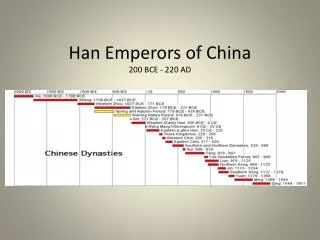
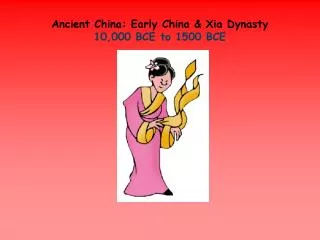
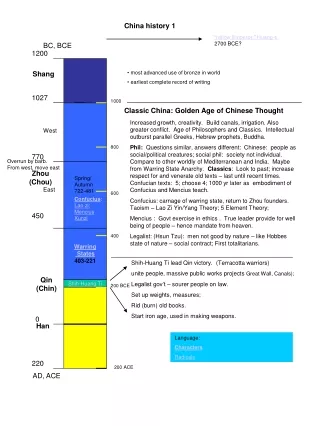
Earliest Civilizations- most isolated • Earliest- Neolithic- Ban Po- similar to other parts of the world/ one of the oldest • Shang Dynasty 1500-11 BCE in No China along the Huang Ho- raised silk worms- silk part of lure and fascination of China, famous for bronze sculpture, daggers, jade jewelry paid homage to ancestors- family important • Chou (Zhou) 1027-256-longest-developed foundations for Chinese society
Ancient China Way of Life- Confucianism p58-59 • Moral and ethical code highly developed treat everyone with consideration • Advocated paternalistic government • Value on family head- ancestor respect • Values- loyalty, righteousness, wisdom, sincerity • very practical and humanistic Gentility
Daoism (Taoism)LaoTzu (Lao Zi) p 60 • contemporary of Confucius • Tao= the road way • Absolute=sum of existence • Goal to bring people into harmony • very introspective • not as influential as Confucius
Zhou (Chou) Dynasty (cont) • Feudal society- emperor gave out fiefs • Shang thought they had a divine right- Chou rulers had responsibility • Zhou did take title “Son of Heaven” • compared to medieval Europe- had a code for dress, fighting etc. • no contracts
Ancient Philosophies • About 500BCE Buddha, Confucius, Greek Philosophers and Chinese - Lao Tze • Called a flowering period • India more concerned with cosmos and soul • China more concerned with ethical life on earth • Ironic comparison of Asoka and Shi Huangdi
Qin (Ch’in) Dynasty 221-206 BCE • dominated by “The First Emperor” • Qin Shi Huangdi (Chin Shi Huang Ti) • ambitious= understatement • centralized the government- rid of feudal lords • constructed roads and canals • The Great Wall- sacrifice AND • An amazing tomb found in 20th Cen
Han Dynasty 202BCE-220 CE(Roman Times) • Similar: built cities, officials to carry out edicts, heavy taxes collapsed under invasions and internal revolts • contact along the Silk Road, Buddhist Missionaries to China • combination of Confucius and legalism • advanced in science and literature • invented rudder, paper, magnetic compass, acupuncture • Short period of Civil War- Sui Dynasty connected two rivers with canal- over extended
Tang Dynasty 618-907 CE Contributions • Internal renewal(improved lives of people) and external expansion • Used formal civil service exam to recruit-set up university • Tried to equalize land holdings- fought corruption • literature and art flourished- Tang horses p 203 • Inventions- paper during Han- used for clothes and tp- 589 used for writing- invented printing, gun powder, encyclopedia
Song(Sung) Dynasty 960-1279 • moved the capitol east- • economic expansion- used paper money, • used abacus- • Silk Road traffic at height • when dangerous went to sea routes • first period of great oceanic commerce • trades tea, silk and porcelain for exotic woods and precious stones
The MongolsNomadic peoples • Loosely organized clans in a state of stress • Genghis Kahn- son of impoverished noble with army of less than 130,000 conquered Asia • mastered military tactics on horseback- pursue and ambush, firelance, took China • Kublai Kahn- grandson Yuan dynasty at Peking- adopted Chinese ways- lasted 100 years- gave way to Ming dynasty