Nutritional aspects of health
This article explores the essential nutritional aspects influencing health, focusing on high biological value proteins, micronutrients (vitamins A1, B6, B12, D, E, iron, zinc, and selenium), and fatty acids in beef. It discusses the impact of polyunsaturated fatty acids (PUFA), including linoleic acid, α-linolenic acid, eicosapentaenoic acid, docosapentaenoic acid, and conjugated linoleic acid. Furthermore, it highlights the effects of antioxidants and polyphenol oxidase on food quality, sensory attributes, and shelf life amid global trade challenges and evolving consumer demands.

Nutritional aspects of health
E N D
Presentation Transcript
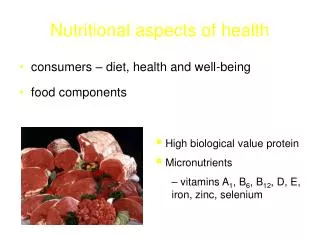
Nutritional aspects of health • consumers – diet, health and well-being • food components • High biological value protein • Micronutrients – vitamins A1, B6, B12, D, E, iron, zinc, selenium
Fatty acids in beef • Polyunsaturated fatty acids (PUFA) • linoleic acid (18:2n-6) • -linolenic acid (18:3n-3) • eicosapentaenoic acid (20:5n-3; EPA) • docosapentaenoic (22:5n-3 DPA) • docosahexaenoic acid (22:6n-3; DHA) • conjugated linoleic acid (CLA) Monounsaturated 18:1 n-9 Saturated 14:0; 16:0 and 18:0
Polyphenol oxidase (PPO) in red clover • Oxidises phenols to quinones in the presence of oxygen • Quinones are very reactive • Quinones bind to proteins to give protein, quinone complexes • Complexes are more resistant to lipolysis (and proteolysis)
Effects on colour shelf life, physical and sensory attributes PUFA Lipid stability Colour shelf life, physical and sensory Red clover Antioxidants
consumers safe healthier consistent convenient globalisation commodity prices world trade negotiations animal welfare environmental traceability commodity production Drivers for enhanced food quality and differentiation
Fred Stephens IFIF Růst populace a spotřeby masa
Podíl spotřeby jednotlivých druhů masa od roku 1980 do roku 2010 ve světě
Fred Stephens IFIFPokles ploch zemědělsky obdělávané půdy ha/osobu