Download
1 / 12
120 likes | 260 Views
This document explores the evolution of the Spanish Testing System, focusing on the SIGEI implementation from 2008 to 2011. It reviews various testing and training modules, emphasizing the transformation of the system through modular structures and assessments. Additionally, it discusses the complexities of language testing, including the implications of lower scores versus higher profiles, and the potential exclusion of valid candidates based on language assessments. The text raises critical questions about testing native speakers in international contexts and the impact of regulations on assessment validity.

E N D
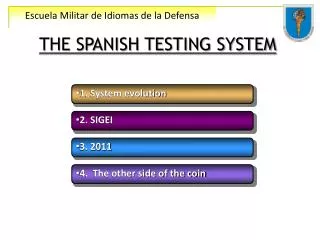
THE SPANISH TESTING SYSTEM • 1. System evolution • 2. SIGEI • 3. 2011 • 4. The other side of the coin
2008 SIGEI IMPLANTATION Testing module + Training module SYSTEM ANALYSIS Transformation of the Testing System EMID
2008 SIGEI IMPLANTATION Testing module + Training module SYSTEM ANALYSIS Transformation of the Testing System 2009 MODULAR STRUCTURE BILC ASSESMENT LTS – ALTS BAT EMID
12 examinees 12 examinees 24 examinees 24 examinees 12examinees 12 examinees
2008 SIGEI IMPLANTATION Testing module + Training module SYSTEM ANALYSIS Transformation of the Testing System 2010 2009 NEW TESTS BAT specs NEW REGULATIONS 2011 MODULAR STRUCTURE BILC ASSESMENT LTS – ALTS BAT EMID
2011 New testingsystem 3 bi-level tests: 1-2 / 2-3 / 3-4 “+” levels implementation BAT 2012
THE OTHER SIDE OF THE COIN LOWER SCORES + HIGHER PROFILES = Valid candidates will be rejected
THE OTHER SIDE OF THE COIN SLP 4.4.4.4. POSTS UNLIKELY TO BE ACHIEVED EVEN FOR NATIVE SPEAKERS. SHOULD THEY BE TESTED?
THE OTHER SIDE OF THE COIN Native speakers in international enviroments Language as a means of exclusion?