Tertiary Treatment: Nutrient Removal, Solids Removal, and Disinfection
Tertiary Treatment: Nutrient Removal, Solids Removal, and Disinfection. Treated Wastewater Effluent Contains…. BOD (biochemical oxygen demand) Carbon matter, depletes O2, causes biomat growth TSS (total suspended solids) Depletes O2 NH3 (ammonia)


Tertiary Treatment: Nutrient Removal, Solids Removal, and Disinfection
E N D
Presentation Transcript
Tertiary Treatment:Nutrient Removal, Solids Removal, and Disinfection
Treated Wastewater Effluent Contains… • BOD(biochemical oxygen demand) • Carbon matter, depletes O2, causes biomat growth • TSS(total suspended solids) • Depletes O2 • NH3(ammonia) • Toxic to fish, depletes O2, a nutrient that promotes biol. growth • NO3(nitrate) • Toxic to babies, drinking water regulated, a nutrient • TP(total phosphorus) • A nutrient • Pathogens (bacteria/viruses) • Disease causing
First, We Must UnderstandWastewater Assimilation • A site’s ability to handle the amount of liquid or the amount of pollutants without causing a public health or environmental health concern • In-ground or In-stream discharge • Sometimes, high-quality effluent is necessary • Low BOD • Low fecal coliform • Low nutrients (Nitrogen and Phosphorus) • Protection of sensitive waterbodies, nearby… • Or drinking water supplies (groundwater & wells)
“Discharge” Permits • In-ground dispersal • ADEM for flows of 10,000 gpd + • UIC Permit (underground injection control) • Specifies a certain effluent quantity and quality • BOD, TSS and groundwater monitoring for NO3 • ADPH for smaller systems • Surface dispersal • Stream Discharge • NPDES Permit(specifies BOD, TSS, NH3, NO3, TP, etc.) • Disinfection Required • Spray Irrigation • NPDES Permit • 7-10 day holding pond required • Disinfection Required
Why is tertiary treatment needed? • To better protect public health and environment • To provide additional treatment when soils or receiving waters cannot
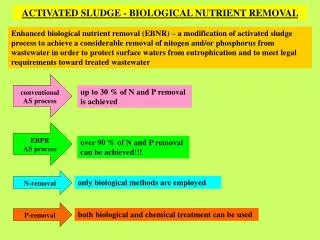
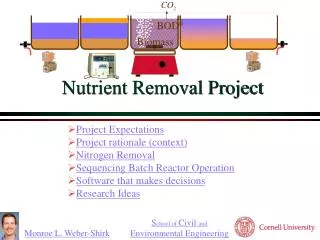
Biological Nitrogen Removal • Uptake into biological cell mass • Nitrification (conversion to Nitrate) • Denitrification (conversion to N2 gas)
Biological Nitrification Conversion of Ammonia to Nitrite (Nitrosomonas) NH4+ + 2 O2 NO2- + 2 H+ + H2O Conversion of Nitrite to Nitrate(Nitrobacter) NO2- + 0.5 O2 NO3-
Nitrification (cont.) • For each mg of NH4+ converted… 3.96 mg of O2 are utilized(Need Oxygen) 0.31 mg of new cells are formed 7.01 mg of alkalinity are removed
Nitrification (cont.) • Nitrifying bacteria are sensitive and susceptible to a variety of conditions. • The following factors affect nitrification: • Conc of NH4+ and NO2- • BOD/TKN ratio (BOD should be gone/removed) • Dissolved oxygen conc (need oxygen) • Temperature • pH (7.5 to 8.6)
Nitrification Processes Suspended Growth Separate Stage Nitrification Single State Nitrification
Nitrification Processes Attached Growth Attached Growth Nitrification following Act. Sludge
A modification of aerobic pathways (no oxygen) Same bacteria that consume carbon material aerobically Denitrifying bacteria obtain energy from the conversion of NO3- to N2 gas, but require a carbon source NO3- + CH3OH + H2CO3 C5H7O2N + N2 + H2O + HCO3- Biological Denitrification Cell mass Organic matter
Denitrification • Need low (no) oxygen (< 1 mg/L) • Need carbon source (BOD in Wastewater) • Neutral pH (pH 7) • Conc of nitrate
Denitrification (cont.) • Separate denitrification reactor or • Combined Carbon Oxidation-nitrification-denitrification reactor • A series of alternating aerobic and anoxic stages • Reduces the amount of air needed • No need for supplemental carbon source
Combined Nitrification/Denitrification(note alternating regions of aerobic and anoxic)
Phosphorus Removal • Chemical Precipitation • Calcium (lime) addition at high pH (>10) • Reacts with alkalinity • Alum (Aluminum Sulfate) precipitation • Iron precipitation
Disinfection • Selective destruction of disease-causing organisms • Chlorine • UV Light • Ozone (gas)
Chlorine Disinfection • Liquid chlorine • Sodium hypochlorite (tablets) Note: not allowed to discharge chlorine (it must be removed after disinfection) * chlorine removed with either… a. sulfur dioxide b. sodium bisulfite
Chlorine Disinfection • To be effective… • Chlorine concentration • Contact time • Proper mixing • Temperature • Number and type of organisms
UV Disinfection • UV Light • Specific wavelengths have biocidal properties (~254 nm) • Quartz, mercury-vapor lamps • Cleaning required • No residual
Ozone Disinfection • O3 a gas, must be generated on-site • Bubbled into a basin (or pipeline) with treated effluent • Great disinfectant! • No residual…ozone degrades to oxygen, O2 • Costs More, Need equipment and electricity
Ozone Disinfection Flow Diagram Ozone Generation