Discovering Leptictidium: The Graceful Weasel of Ancient Forests
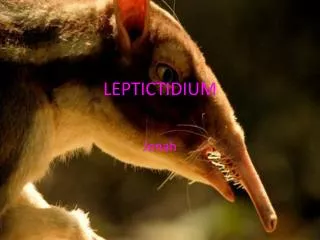
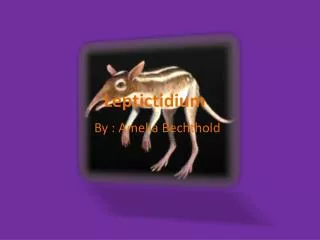
Leptictidium, often referred to as the "arctic squirrel" (though that name is misleading), thrived in forest habitats. This small mammal was characterized by its brown fur, adorned with two white stripes and numerous white dots. Primarily a carnivore, it fed on lizards and small mammals, utilizing its unique two-legged hopping motion for movement. However, it faced predation from the formidable gastornis birds. The name Leptictidium translates to "graceful weasel" in Latin, highlighting its agile nature and role in ancient ecosystems.

Discovering Leptictidium: The Graceful Weasel of Ancient Forests
E N D
Presentation Transcript
Leptictidium By : Amelia Bechthold
Habitat The leptictidiums habitat is forests.
Appearance The leptictidiums were brown with two white stripes and lots of white dots.
Diet The leptictidiums diet was lizards and other small mammals.
Motion The leptictidiums hopped on two legs.
Predators The leptictidiums predators were gastornises.
Common/Scientific Name People call the leptictidium arctic squirrel but it is not how you say it.
Interesting facts Leptictidium means graceful weasel in Latin.